






ECT (edge crush test) measures how much load corrugated board takes standing on its edge, in pounds per inch; the Mullen test measures the pressure that bursts through it, in pounds per square inch. In the freight classification a 32 ECT box and a 200# Mullen box are the same class: up to 65 lb and 75 in of length plus width plus depth.[1][2]
32 ECT = 200#
Same classRule 41 lets a 32 ECT box stand in for a 200 lb burst box.[1]
Freight limit
65 lb, 75 inBox plus contents, and length plus width plus depth, for that class.[1]
UPS chart
30 lbUPS's own box strength guide puts 32 ECT at 0 to 30 lb.[5]
80% humidity
32% weakerThe stacking-strength loss in the FBA's published factors.[6]
Free. Just your work email.
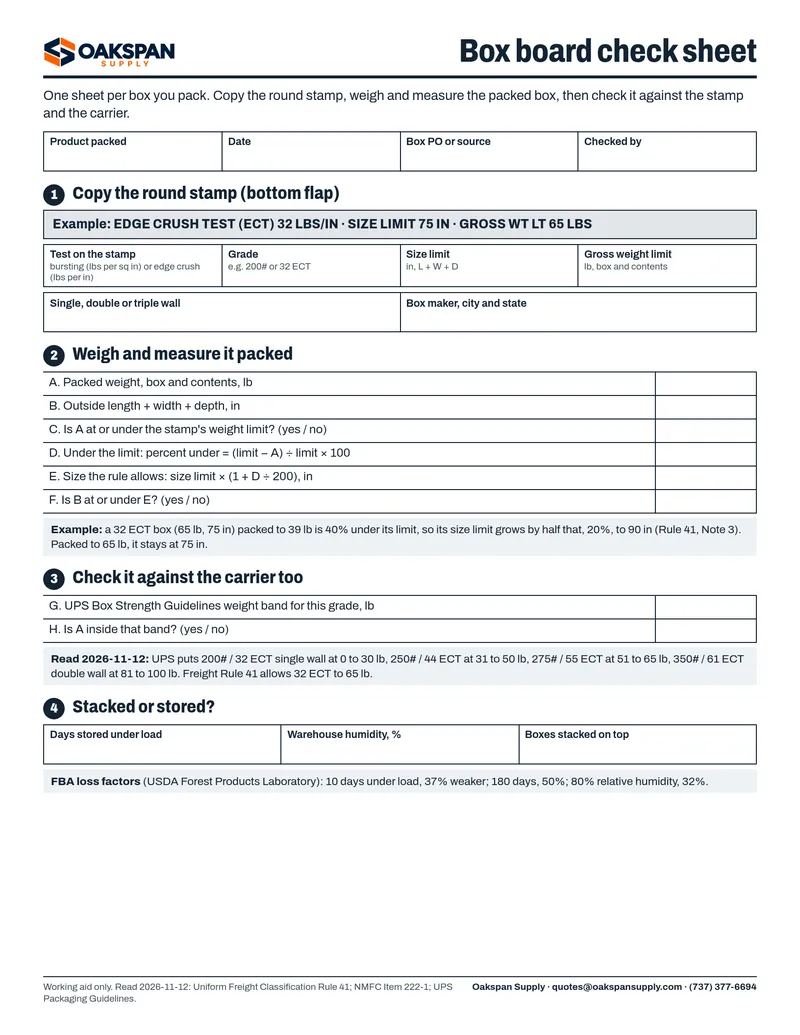
Print the box board check sheet
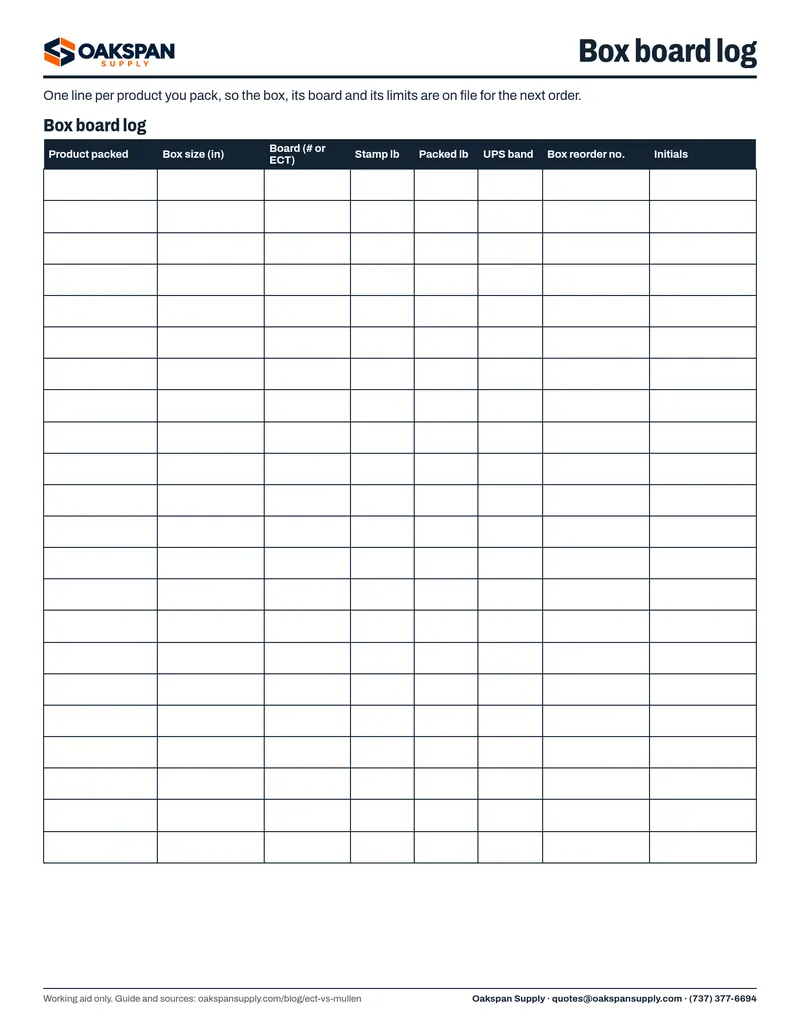
A two-page sheet for your packing and receiving desk: read the stamp, check the board against the weight, and log it for the next reorder.
- Copy the stamp: test, grade, size and weight limits
- Weigh and measure the packed box against the stamp
- Check the grade against the UPS chart too
- Log each product's box and board for reorders
Two pages, letter size. The sheet downloads right away. We'll send you the occasional supply guide and may use your email to show you our ads. Unsubscribe any time. Privacy policy.
Try it
Which board does your box need?
Type the packed weight and the box's outside length plus width plus depth. The finder reads the freight classification's own table (Rule 41) and names the lightest single-wall and double-wall grade that covers it, in both tests.[1]
What ECT and the Mullen test measure
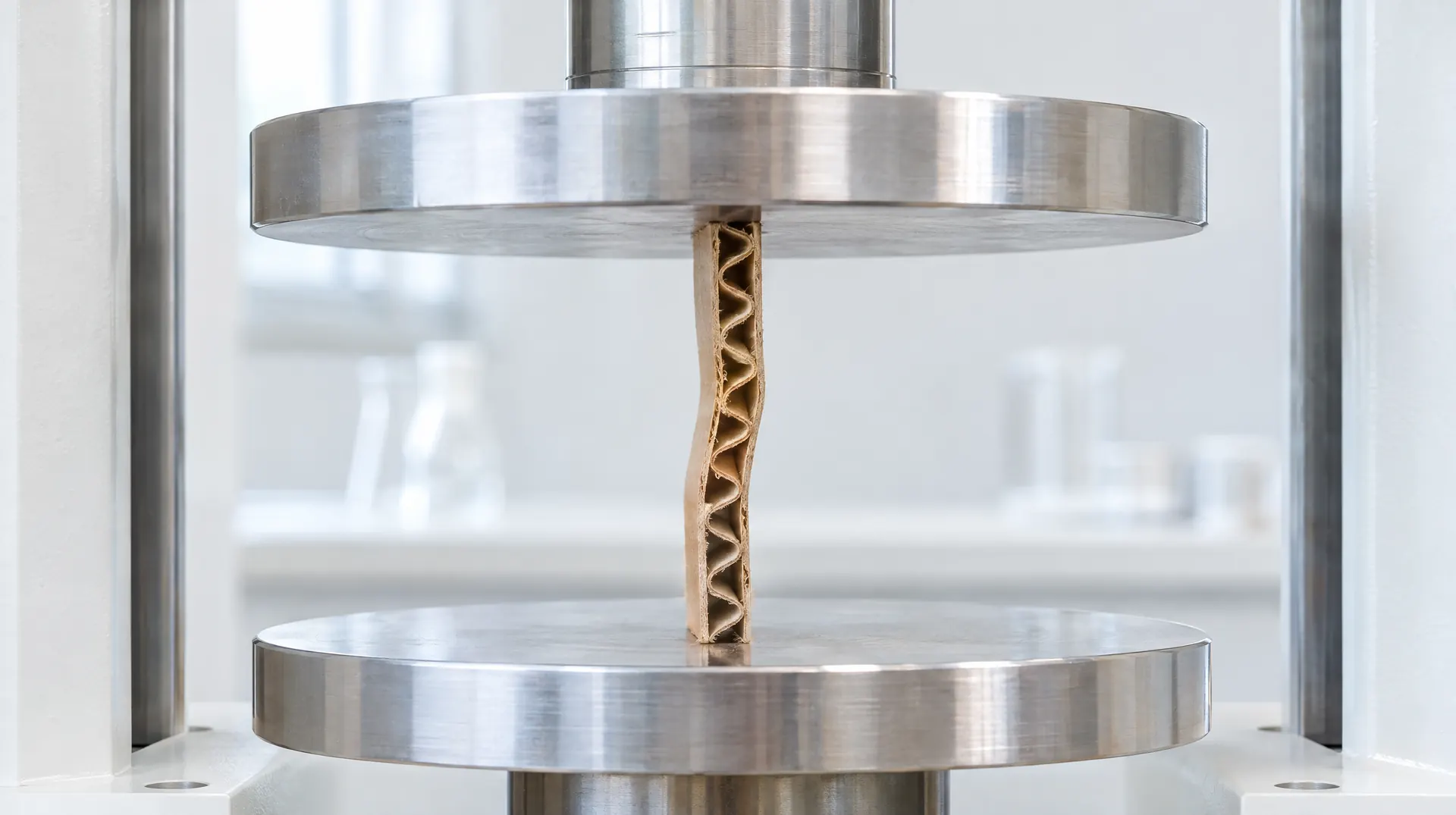
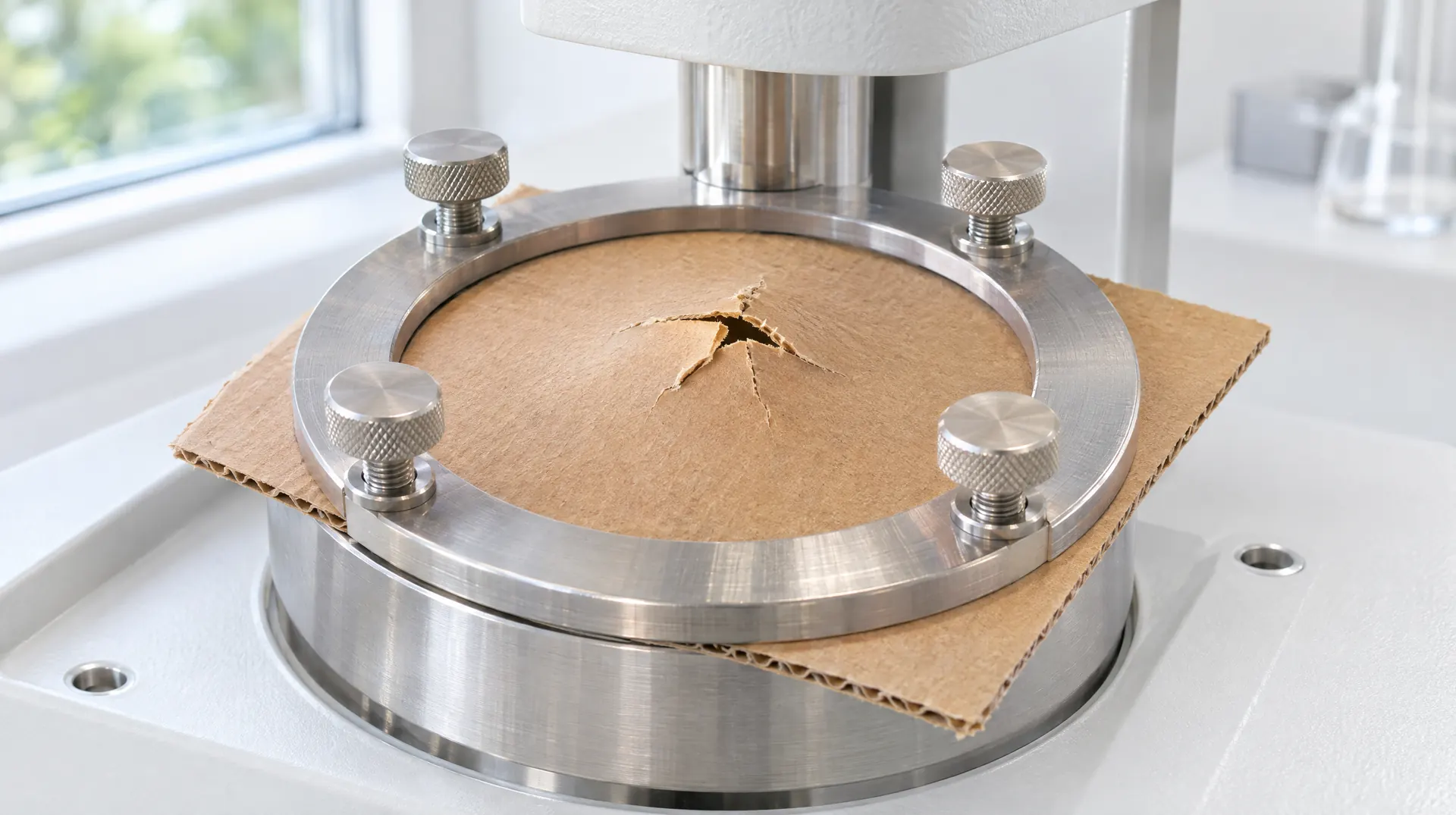
The edge crush test stands a sample of corrugated board on its edge, flutes upright, and presses down until it fails. The National Motor Freight Classification (NMFC) Item 222-6 defines it as a test "to determine its resistance to compression measured as pounds per inch of width", also called the Short Column Test. So 32 ECT means a strip of the board held 32 pounds per inch of width.[2]
The Mullen test pushes a rubber diaphragm up through the board until it bursts. Item 222-6 defines bursting strength as "a material's resistance to bursting measured in pounds per square inch as determined by the Mullen Tester." So 200# on a box means the board took 200 pounds per square inch before it burst.[2]
Each test has a method number. TAPPI T 811 covers the edgewise compressive strength of a short column of single-, double- or triple-wall board. TAPPI T 810 covers bursting strength of single- and double-wall board from 100 psi to 700 psi, using a disk-shaped molded diaphragm distended by hydraulic pressure "until the specimen bursts." Rule 41 of the rail freight classification names T 810 for burst and T 811 for edge crush.[1][3][4]
Rule 41 says what the edge crush number is for: the edgewise strength of the board, "in combination with the caliper of the combined board and the perimeter of the container relates to the top-to-bottom compressive strength" of the box. In plain words, ECT is about stacking. Burst is about the board's face holding together.[1]
32 ECT vs 200#: the same box class, two tests
The freight classification sets a box's limits by its board grade. Rule 41, Section 3 lists, for each grade, the maximum weight of box and contents, the maximum outside dimensions (length, width and depth added), the minimum combined weight of the facings, the minimum bursting test and the minimum edge crush test. Note 4 lets a box rated by the edge crush test in Column B stand in where a rule asks for the bursting test in Column A.[1]
The edge crush route frees the paper. Rule 41 Note 2 says the minimum facing weights do not apply to board that meets the edge crush test, and "any combination of facings is authorized" as long as the board meets its edge crush minimum. A 200# box has to be built from heavy enough paper; a 32 ECT box only has to pass the test.[1]
A lighter box may be bigger. Rule 41 Note 3: if the weight of box and contents is under the maximum, the maximum outside dimensions "may be increased half the percentage that the actual weight is less than the maximum weight specified." A 32 ECT box packed to 39 lb is 40% under its 65 lb limit, so its 75 in size limit may grow by 20%, to 90 in.[1]
To pass, the board is tested at least six times. For the edge crush test, Rule 41 allows only one of the six to fall below the minimum, and that one by no more than 10%.[1]
Scroll across to see every column →
| Board | Burst test (Mullen) | Or edge crush test | Max weight, box and contents | Max size, L + W + D |
|---|---|---|---|---|
| Single wall | 125# | 23 ECT | 20 lb | 40 in |
| Single wall | 150# | 26 ECT | 35 lb | 50 in |
| Single wall | 175# | 29 ECT | 50 lb | 60 in |
| Single wall | 200# | 32 ECT | 65 lb | 75 in |
| Single wall | 250# | 40 ECT | 80 lb | 85 in |
| Single wall | 275# | 44 ECT | 95 lb | 95 in |
| Single wall | 350# | 55 ECT | 120 lb | 105 in |
| Double wall | 200# | 42 ECT | 80 lb | 85 in |
| Double wall | 275# | 48 ECT | 100 lb | 95 in |
| Double wall | 350# | 51 ECT | 120 lb | 105 in |
| Double wall | 400# | 61 ECT | 140 lb | 110 in |
| Double wall | 500# | 71 ECT | 160 lb | 115 in |
| Double wall | 600# | 82 ECT | 180 lb | 120 in |
Source: [1]
Reading the round stamp on the bottom flap
The round stamp is the Box Maker's Certificate. NMFC Item 222-1 says every fiber box made to the rule must carry a legible certificate of the box manufacturer on an outside surface, 3 inches across (plus or minus 1/4 inch), with the city and state of the plant or the company. A box under 10 in long or 9 in wide may carry one no less than 2 inches across.[2]
The two forms of the stamp tell the two tests apart. The burst form, in the Fibre Box Association's reproduction of Item 222-1, reads bursting test 200 lbs per sq inch, minimum combined weight of facings 84 lbs per thousand sq ft, size limit 75 inches, gross weight limit 65 lbs. The edge crush form reads edge crush test (ECT) 32 lbs per inch, size limit 75 inches, gross weight limit 65 lbs, with no facings line, because the ECT route has no paper weight to state.[2]
A box made of parts with different grades shows the weakest one: Item 222-1 says the certificate must reflect "the lowest represented" bursting or edge crush test of any part.[2]
Scroll across to see every column →
| Line on the stamp | Burst form | Edge crush form |
|---|---|---|
| The test | Bursting test 200 lbs per sq inch | Edge crush test (ECT) 32 lbs per inch |
| Paper weight | Min comb wt facings 84 lbs per M sq ft | None: not required for ECT board |
| Size limit | 75 inches (L + W + D) | 75 inches (L + W + D) |
| Gross weight limit | 65 lbs, box and contents | 65 lbs, box and contents |
| Maker | Box maker's name, city and state | Box maker's name, city and state |
Source: [2]
The freight rule says 65 lb. UPS says 30 lb.
The stamp's limits are the freight classification's. UPS publishes its own Box Strength Guidelines chart, and it puts a single-wall 200# or 32 ECT box at 0 to 30 lb and under 75 in, less than half the 65 lb on the stamp. UPS also tells shippers to "never exceed the maximum gross weight limit for the box, which is printed on the Box Maker's Certificate on the bottom flap of most boxes."[5]
UPS pairs the grades differently too: 250# with 44 ECT for 31 to 50 lb, and 275# with 55 ECT for 51 to 65 lb, where Rule 41 pairs 275# with 44 ECT. UPS calls the chart guidelines that "are not to be considered packaging specifications", says packages should be tested to ISTA Test Procedure 3A, and says the chart's size limits are unrelated to the length and girth UPS measures for billing.[1][5]
FedEx's General Packaging Guidelines carry no box strength chart. The guide says "You may use your own packaging if boxes are sturdy and undamaged with all flaps intact" and "Use double-wall boxes for heavier items," and names no burst or edge crush grade.[9]
Scroll across to see every column →
| Weight | Size limit | Burst test | Edge crush test | Walls |
|---|---|---|---|---|
| 0 to 30 lb | Under 75 in | 200# | 32 ECT | Single |
| 31 to 50 lb | 75 to 85 in | 250# | 44 ECT | Single |
| 51 to 65 lb | 85 to 96 in | 275# | 55 ECT | Single |
| 66 to 80 lb | 95 to 105 in | 350# | None listed | Single |
| 81 to 100 lb | 95 to 105 in | 350# | 61 ECT | Double |
| 101 to 120 lb | 105 to 110 in | 400# | 71 ECT | Double |
| 121 to 140 lb | 110 to 115 in | 500# | 82 ECT | Double |
| 141 to 150 lb | 115 to 120 in | 600# | None listed | Double |
Source: [5]
The paper weight on a burst stamp, grade by grade
The burst form of the certificate carries a line the edge crush form does not: the minimum combined weight of facings, in pounds per 1,000 square feet of board. Rule 41, Section 3 sets that weight for every burst grade. A 200# single-wall box needs facings of at least 84 lb per 1,000 sq ft. A 275# single-wall box needs 138 lb, which is 64% more paper in the facings.[1]
For double-wall and triple-wall board the figure includes the centre facings between the fluted layers. A 275# double-wall box needs 110 lb per 1,000 sq ft, less than the 138 lb of a 275# single-wall box, because the second fluted layer does part of the work.[1]
Triple-wall board is graded by a puncture test, not a burst test. Rule 41 lists four triple-wall grades, from 700 to 1,300 inch ounces per inch of tear, or 67 to 112 ECT. Their limits are 240 lb and 110 in, 260 lb and 115 in, 280 lb and 120 in, and 300 lb and 125 in. The rule names TAPPI T-803 for the puncture test.[1]
The burst test has its own pass rule. Rule 41 asks for at least six bursts, three from each side of the board, and lets only one fall below the minimum. Board that fails is accepted if, in a retest of 24 bursts, no more than four fall below.[1]
Scroll across to see every column →
| Board | Burst test (triple wall: puncture test) | Min. combined weight of facings (lb per 1,000 sq ft) | Or edge crush test |
|---|---|---|---|
| Single wall | 125# | 52 | 23 ECT |
| Single wall | 150# | 66 | 26 ECT |
| Single wall | 175# | 75 | 29 ECT |
| Single wall | 200# | 84 | 32 ECT |
| Single wall | 250# | 111 | 40 ECT |
| Single wall | 275# | 138 | 44 ECT |
| Single wall | 350# | 180 | 55 ECT |
| Double wall | 200# | 92 | 42 ECT |
| Double wall | 275# | 110 | 48 ECT |
| Double wall | 350# | 126 | 51 ECT |
| Double wall | 400# | 180 | 61 ECT |
| Double wall | 500# | 222 | 71 ECT |
| Double wall | 600# | 270 | 82 ECT |
| Triple wall | 700 puncture | 168 | 67 ECT |
| Triple wall | 900 puncture | 222 | 80 ECT |
| Triple wall | 1100 puncture | 264 | 90 ECT |
| Triple wall | 1300 puncture | 360 | 112 ECT |
The facings weight does not apply to board that meets the edge crush test (Rule 41, Note 2). Triple-wall puncture figures are inch ounces per inch of tear.
Source: [1]
Why stacking strength is an ECT question
A box's top-to-bottom strength is estimated from its ECT. A Georgia Tech Renewable Bioproducts Institute paper gives the simplified McKee equation: box compression strength = 5.87 x ECT x the square root of (perimeter x caliper), in pounds, pounds per inch and inches, the perimeter being twice the length plus the width.[6]
The equation dates to 1963. A USDA Forest Products Laboratory study of 46 years of box data calls it the state of the art among industry estimates, and reports that McKee's own data averaged 6.1% between predicted and actual strength, with 97% within plus or minus 15%.[7]
Two things follow from the equation. Strength rises in step with ECT: a 48 ECT board gives one and a half times the stacking strength of 32 ECT at the same size and caliper. And it rises only with the square root of the perimeter, so a box with twice the perimeter is about 1.41 times as strong, not twice. Burst test does not appear in the equation at all.[6]
Humidity and time: what shrinks a box's strength
Board is paper, and paper takes on water. The Georgia Tech paper reproduces the compression-loss factors the Fibre Box Association publishes, sourced to the USDA Forest Products Laboratory: a box stored under load loses 37% of its compression strength in 10 days and 50% in 180 days, and at 80% relative humidity it loses 32%. The table notes that cycling humidity "further increases compressive loss".[6]
A higher ECT number is not the whole story in a damp warehouse. A Forest Products Laboratory study of two board materials in cycling humidity found the stronger one only 30% stronger in a quick crush test, but able to carry a 115% greater load at the level that gave a 5% chance of failure after 48 hours.[8]
Scroll across to see every column →
| Condition | Strength lost | Multiply strength by |
|---|---|---|
| Stored under load, 10 days | 37% | 0.63 |
| Stored under load, 30 days | 40% | 0.60 |
| Stored under load, 90 days | 45% | 0.55 |
| Stored under load, 180 days | 50% | 0.50 |
| 50% relative humidity | 0% | 1.00 |
| 70% relative humidity | 20% | 0.80 |
| 80% relative humidity | 32% | 0.68 |
| 90% relative humidity | 52% | 0.48 |
Source: [6]
The boxes Oakspan Supply lists, by board
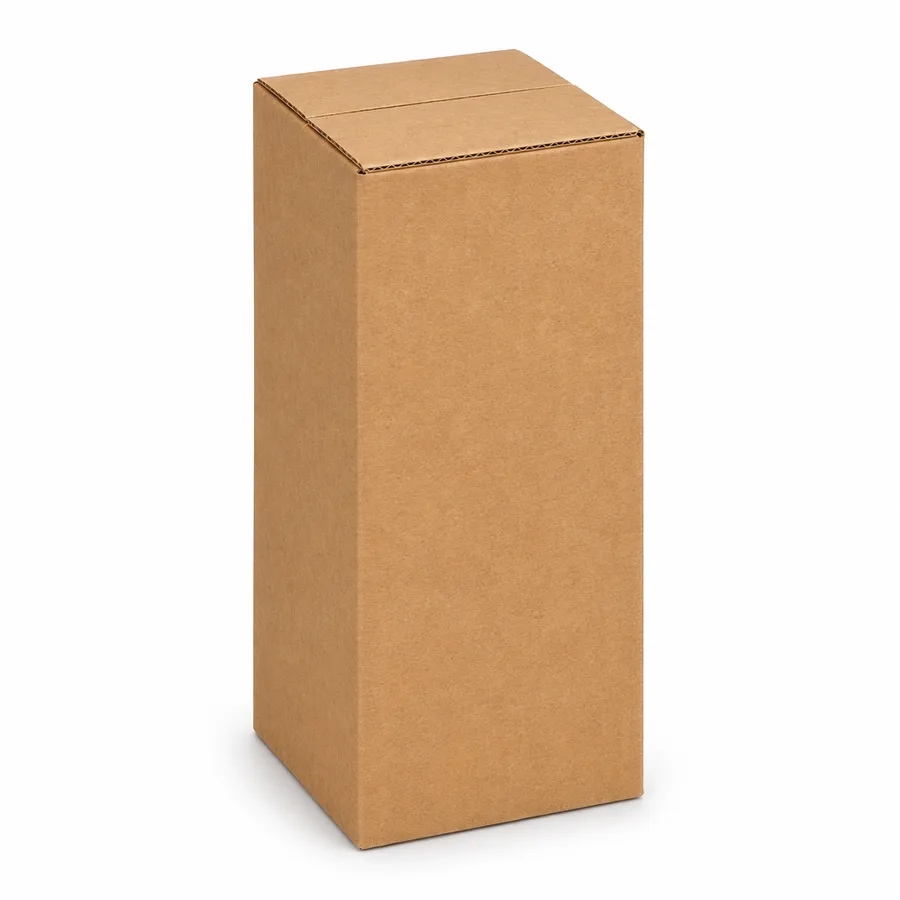
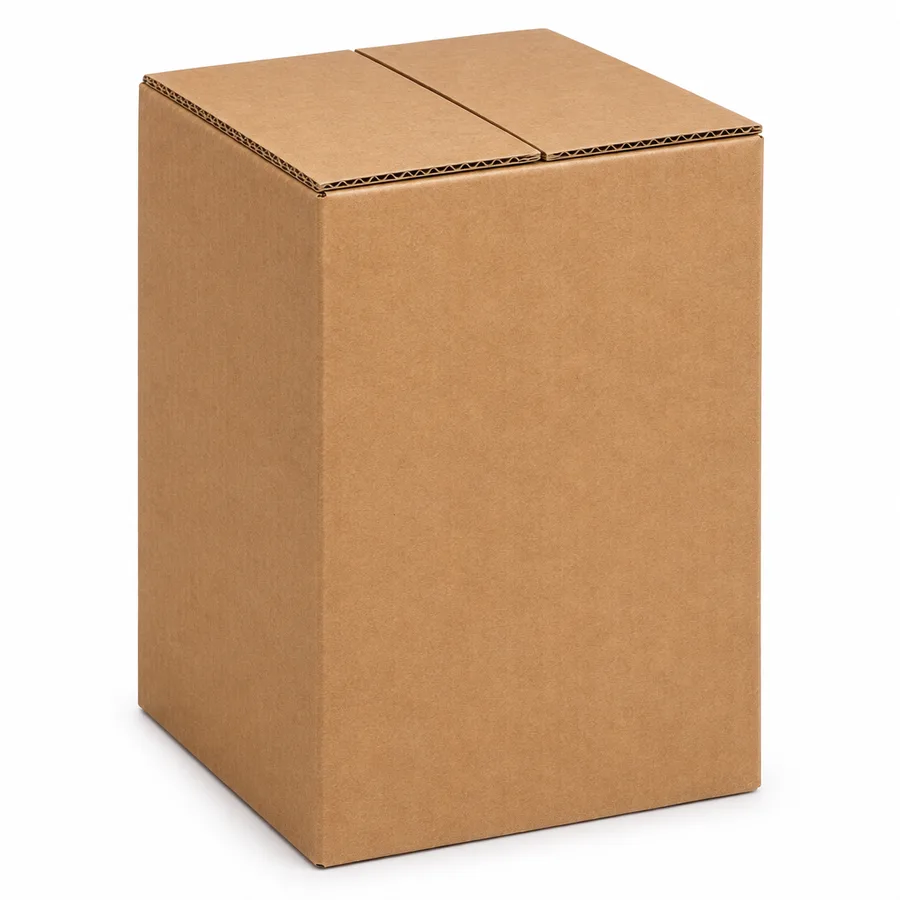
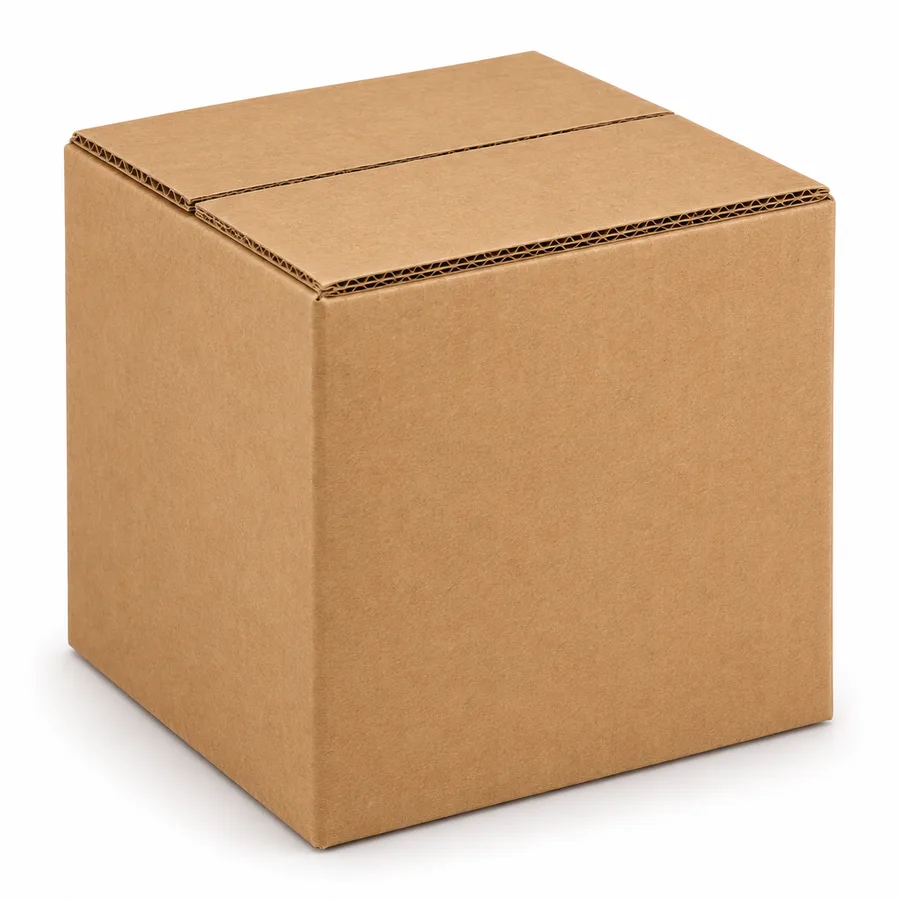
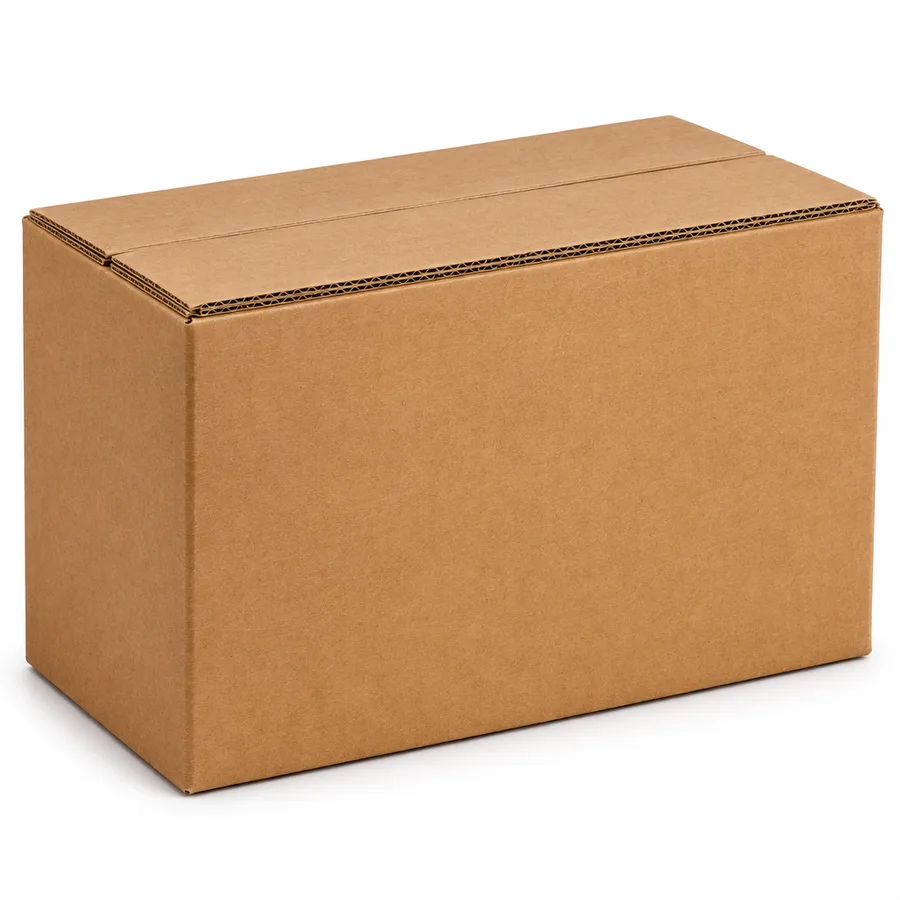
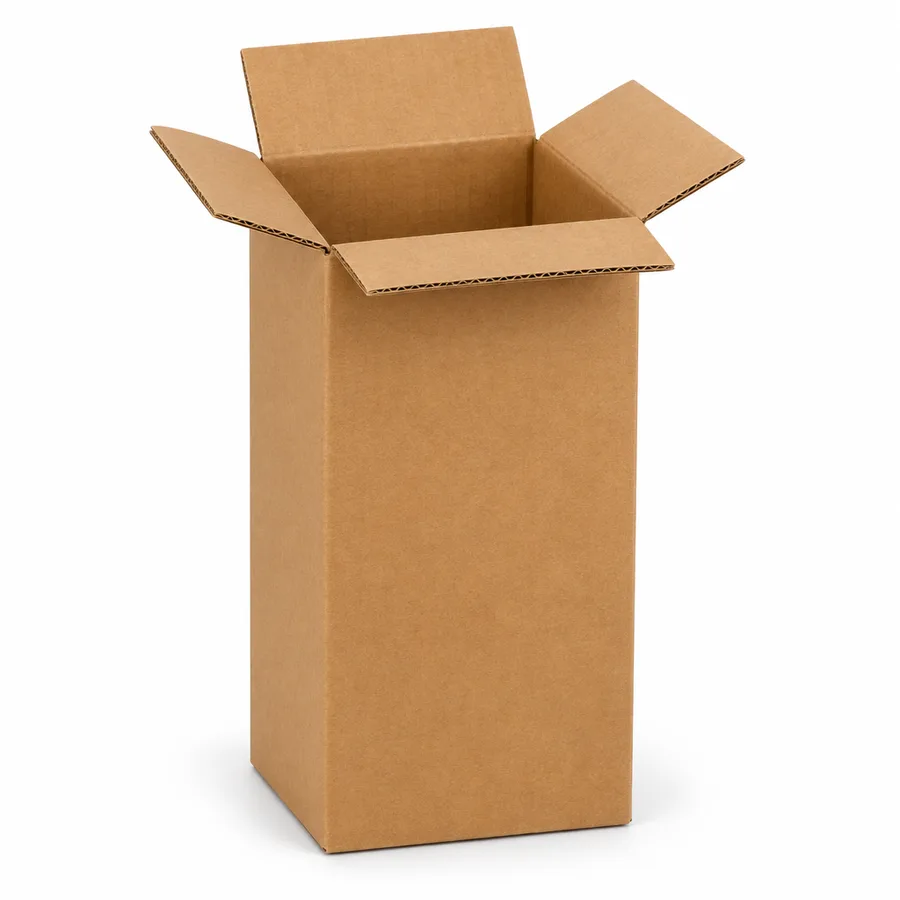
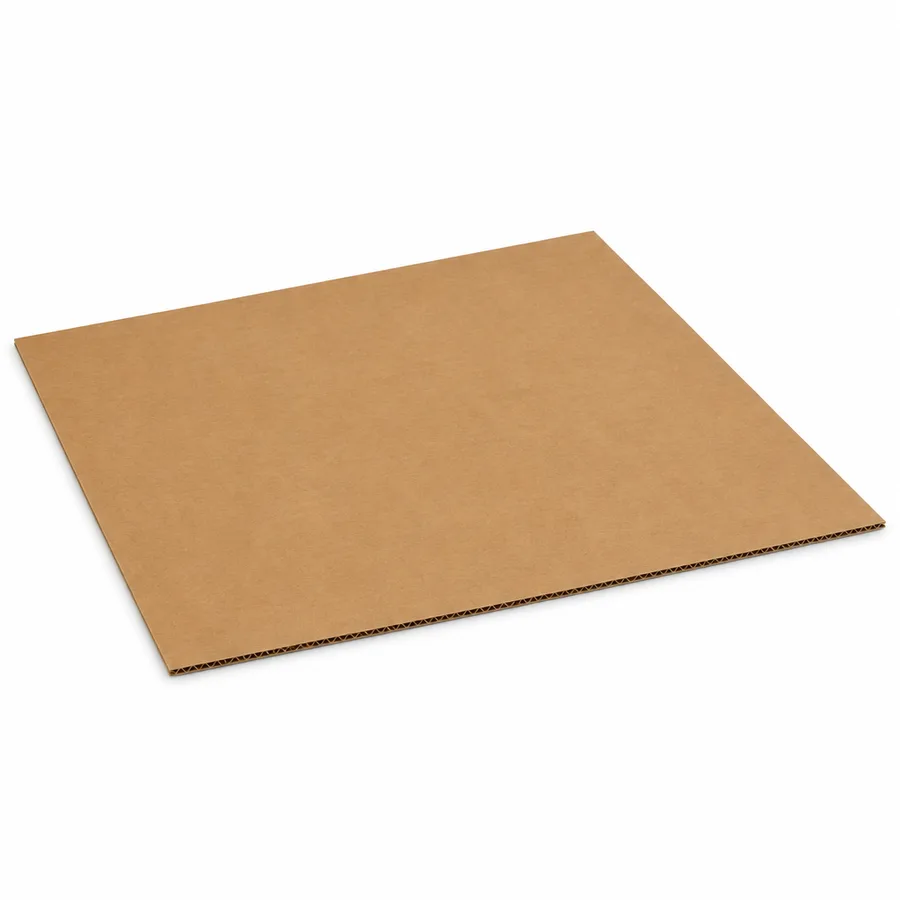
Oakspan Supply's cartons run from single-wall to double-wall board, and each listing gives the board grade its supplier states, written the way the stamp writes it. They include a single-bottle carton, our small RSC shipping box, a four-bottle corrugated shipping carton and the double-wall cartons for gallon and liter bottles, plus a corrugated pallet slip sheet and carton sealing tape. Each part number and its grade is in the links below.
Oakspan Supply sells plants, labs and warehouses the supplies on their list, from gloves and labels to drum closures and packaging. Send the weight and size you ship, or a photo of the stamp on your current box, to our quotes desk at quotes@oakspansupply.com, and we price the board you need, listed or not.
On our shelves
Questions
Is 32 ECT the same as 200 lb test?
In the freight classification, yes: Rule 41 lets a 32 ECT single-wall box stand in for a 200 lb burst box, and both carry the same limits, 65 lb and 75 in. The tests measure different things, edge crush for stacking and burst for the board's face.[1]
How much weight can a 32 ECT box hold?
The freight classification limit is 65 lb of box and contents and 75 in of length plus width plus depth. UPS's own Box Strength Guidelines chart puts 32 ECT at 0 to 30 lb.[1][5]
What does 44 ECT mean?
A strip of the board held 44 pounds per inch of width standing on its edge. In Rule 41 a single-wall 44 ECT box pairs with 275 lb burst, up to 95 lb and 95 in; UPS's chart puts 44 ECT at 31 to 50 lb.[1][2][5]
What does 275 DW 48 ECT mean?
Double-wall board rated 275 lb burst or 48 ECT. In Rule 41 that double-wall grade covers up to 100 lb and 95 in.[1]
What does 48 ECT mean?
A strip of the board held 48 pounds per inch of width standing on its edge. In Rule 41, 48 ECT is a double-wall grade that pairs with 275 lb burst, up to 100 lb and 95 in.[1][2]
Is a 200# box rated for more weight than a 32 ECT box?
Not in the freight classification and not on UPS's chart. Rule 41 gives both grades 65 lb and 75 in, and UPS's Box Strength Guidelines put 200# and 32 ECT on the same row, 0 to 30 lb.[1][5]
How much weight can a double-wall box hold?
Rule 41 lists six double-wall grades, from 200# burst or 42 ECT at 80 lb and 85 in up to 600# burst or 82 ECT at 180 lb and 120 in. UPS's chart lists double-wall board for 81 lb to 150 lb.[1][5]
What does "min comb wt facings" mean on a box stamp?
The minimum combined weight of the board's facings, in pounds per 1,000 square feet. It appears only on the burst form of the stamp: 84 lb for a 200# single-wall box in Rule 41. Board rated by the edge crush test has no paper weight to state.[1][2]
Have a list of what you need? Our quotes desk prices the exact items.

Written by Anastasiia Kuziak, Manager and President of Oakspan Supply. She has a business degree, owns a small business of her own, and has more than five years in medical and pharmaceutical sales. How we write and check our guides.
Sources
- Uniform Freight Classification 6000-M, Rule 41 (corrugated and solid fibreboard boxes). Railinc (Uniform Freight Classification). Accessed 2026-11-17.
- NMFC Items 222-1 to 222-6: Certificate of box manufacturer and definitions (NMF 100, reproduced with NMFTA permission). Fibre Box Association. Accessed 2026-11-17.
- T 811 om-23: Edgewise compressive strength of corrugated fibreboard (short column test). TAPPI. Accessed 2026-11-12.
- T 810 om-22: Bursting strength of corrugated board. TAPPI. Accessed 2026-11-12.
- Packaging Guidelines: Box Strength Guidelines. UPS. Accessed 2026-11-17.
- Effects of moisture content on box compression strength: FBA BCT loss factors (R.E. Popil). Georgia Institute of Technology, Renewable Bioproducts Institute. Accessed 2026-11-12.
- Box compression analysis of world-wide data spanning 46 years (Urbanik and Frank, Wood and Fiber Science, 2006). USDA Forest Service, Forest Products Laboratory. Accessed 2026-11-12.
- Performance of corrugated fiberboard in cyclic humidity (Urbanik, 1997). USDA Forest Service, Forest Products Laboratory. Accessed 2026-11-12.
- General Packaging Guidelines. FedEx. Accessed 2026-11-17.
Written from the sources above under our editorial policy. Published November 12, 2026, last updated November 17, 2026. Spot an error? Send us a correction and we fix it and note the date.
- Shipping boxes
- OKS-BOX-RSC-4X4X10: RSC shipping box, 200B 32ECT
- OKS-BOX-4X1GAL: four-bottle carton, 44ECT C
- OKS-BOX-DW-12X12X16: double-wall box, 275 DW 48 ECT
- OKS-BOX-4X1GAL-DW: double-wall carton for 4 x 1 gal bottles, 275 DW 48 ECT
- OKS-BOX-8X1L-DW: double-wall carton for 8 x 1 L bottles, 275 DW 48 ECT
- OKS-BOX-1X1GAL: single-gallon-bottle carton, 175 C 29 ECT
- OKS-BOX-PAD-48X40: corrugated pallet slip sheet, 26ECT C
- OKS-TAP-TPC-48X100: carton sealing tape
- Standard shipping box sizes and what carriers bill for them
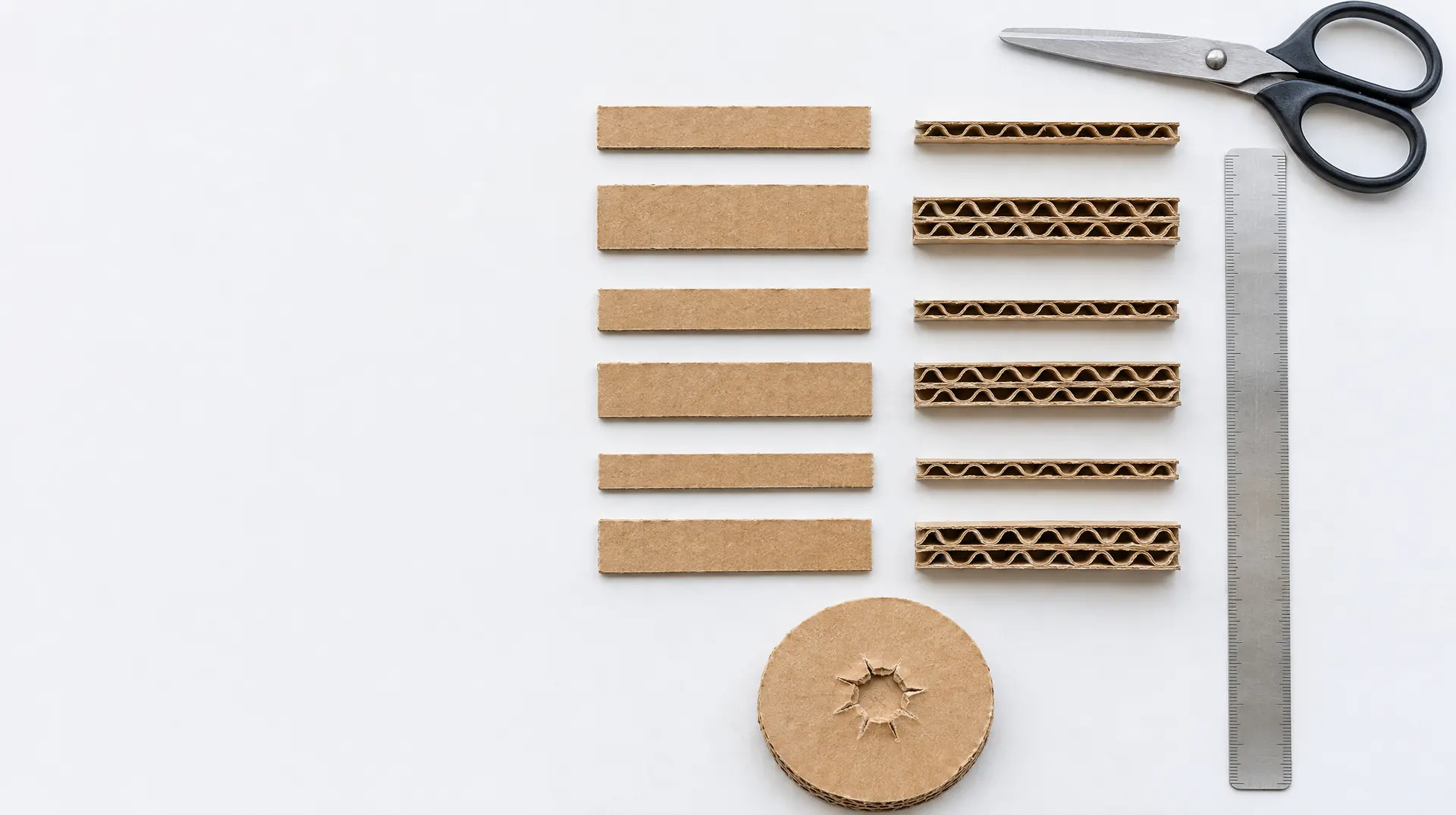
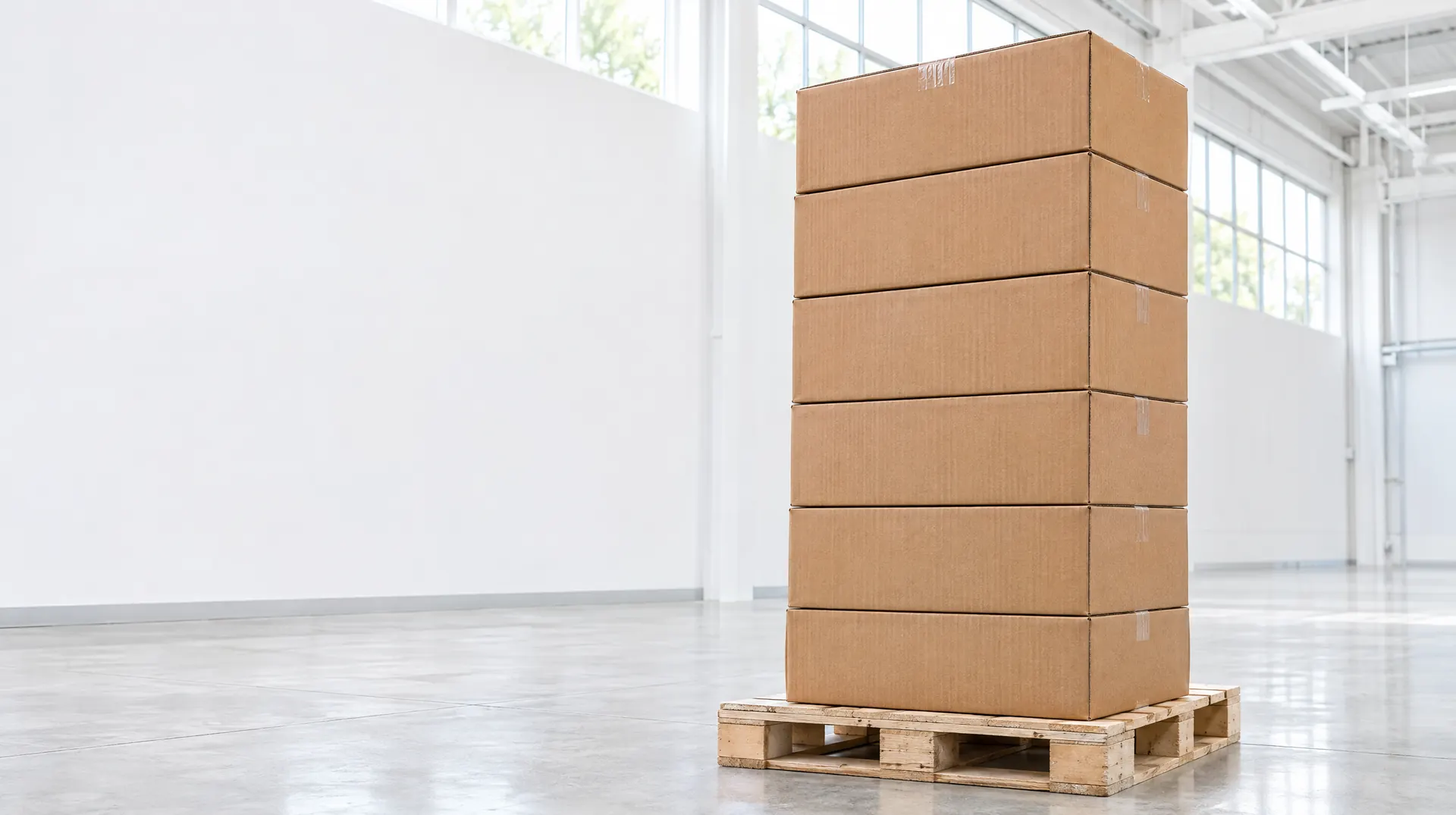
The photos on this page are AI images of generic corrugated board and test machines, not a specific product or tester. The tables are typed from the sources.