









Meet the writer
Anastasiia Kuziak
Manager and President, Oakspan Supply LLC
Anastasiia writes our guides and news. She has owned her own business and came to industrial supplies from medical and pharmaceutical sales, where buyers ask for exact specifications, documents and handling instructions, and expect a straight answer.
- Background
- More than five years in medical and pharmaceutical sales: opening and managing accounts at hospitals, clinics and pharmaceutical buyers
- Business
- Founder and owner of Eye Charm Artistry, an Austin lash and brow studio: she set the prices and services, hired and trained staff, and ran the bookings, learning how a small business works first-hand. She has also helped develop a few other businesses.
- Education
- Bachelor of Arts, Business Management and Administration, West Ukrainian National University
- Languages
- English, Russian and Ukrainian
- Writes about
- Drums, totes and pails; labels and markings; packaging specs; rule changes that affect supply buyers
Articles by Anastasiia Kuziak
Wheel Chocks: Sizes, Where They Go and What OSHA Actually Requires
A wheel chock is a wedge set tight against a tire so a parked vehicle cannot roll. OSHA's forklift rule says to set the brakes and chock the rear wheels of a highway truck before a forklift drives in, but OSHA does not enforce it against commercial motor vehicles, which fall under federal parking brake rules. No federal rule sets a chock size: makers list each chock's height and limits. Blog, published November 19, 2026.
Hand Truck vs Dolly: What Each One Is, the Types and How Much They Carry
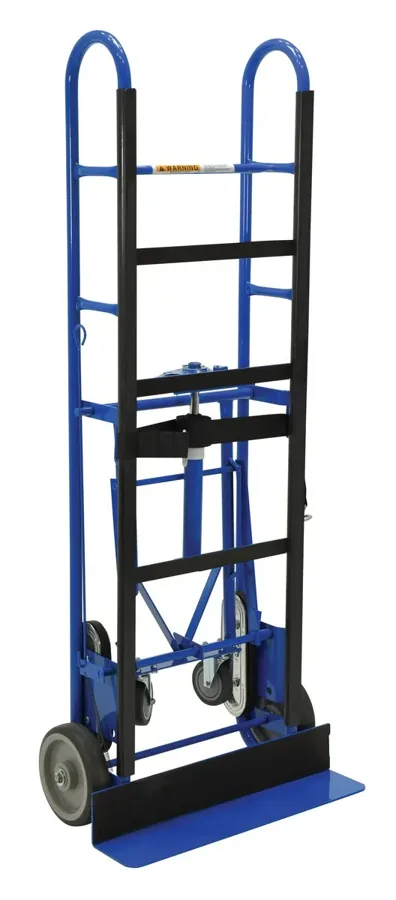
A hand truck stands upright on two wheels with a nose plate: you tip the load back and balance it as you roll. A dolly is a flat platform on wheels or casters: you set the load on it and push. Vestil rates its hand trucks from 150 lb for a folding model to 1,200 lb for a ratchet appliance cart. Blog, published November 18, 2026.
Drum Lifters, Rotators and Carriers: Which One Makes Which Move
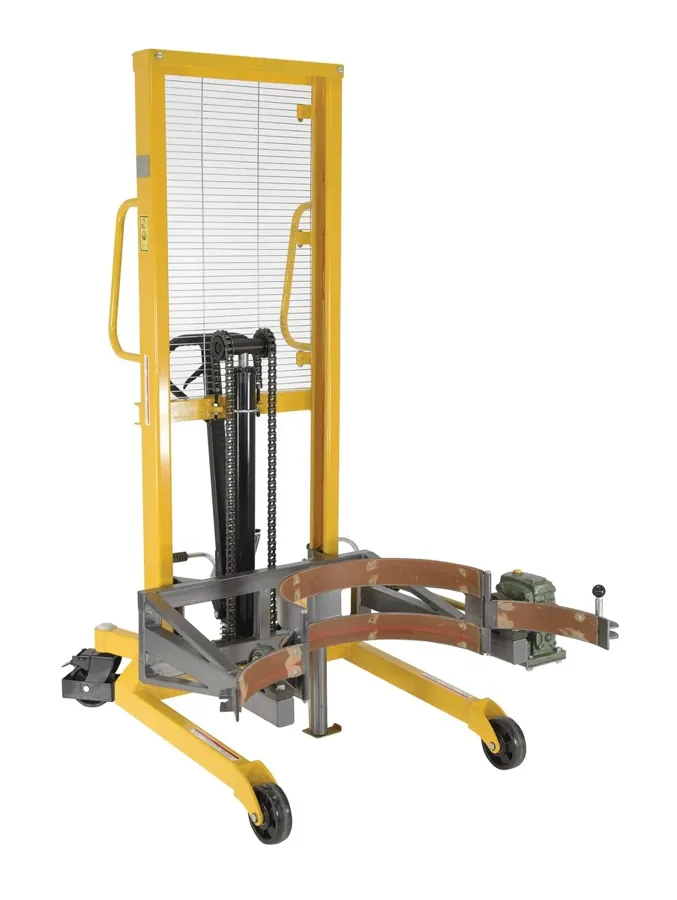
Pick a drum lifter by the move. A floor lifter-rotator such as Vestil's DRUM-LRT lifts and pours, rated 550 lb; a transporter lifts a few inches to roll; forklift and hoist models ride forks or hang from a hook. Water alone weighs about 459 lb in a 55-gallon drum. Blog, published November 17, 2026.
Forklift Fork Extensions: How Long They Can Be and What OSHA Requires
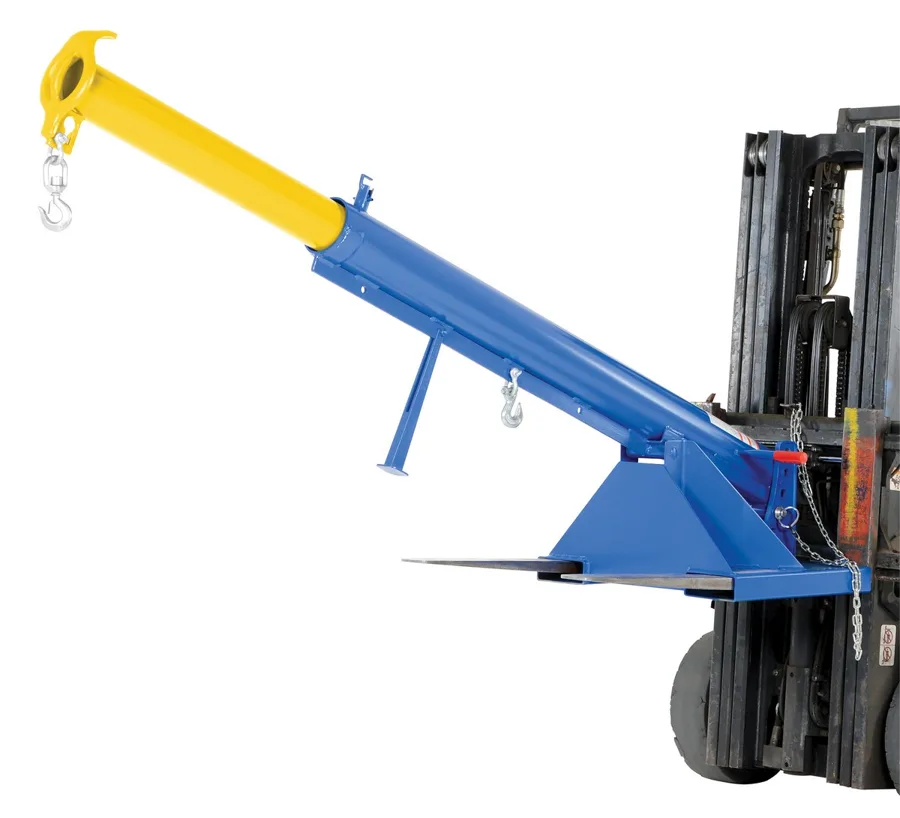
A fork extension slides over a forklift fork to carry longer loads. Vestil's manual limits an extension to 150% of the fork's length, so 48 in forks take up to 72 in. OSHA's rule sets no length; it requires the forklift maker's written approval and updated capacity plates for additions that affect capacity. Blog, published November 16, 2026, updated November 17, 2026.
Self-Dumping Hopper Sizes for Forklifts: Volume, Rated Load and What It Puts on the Forks
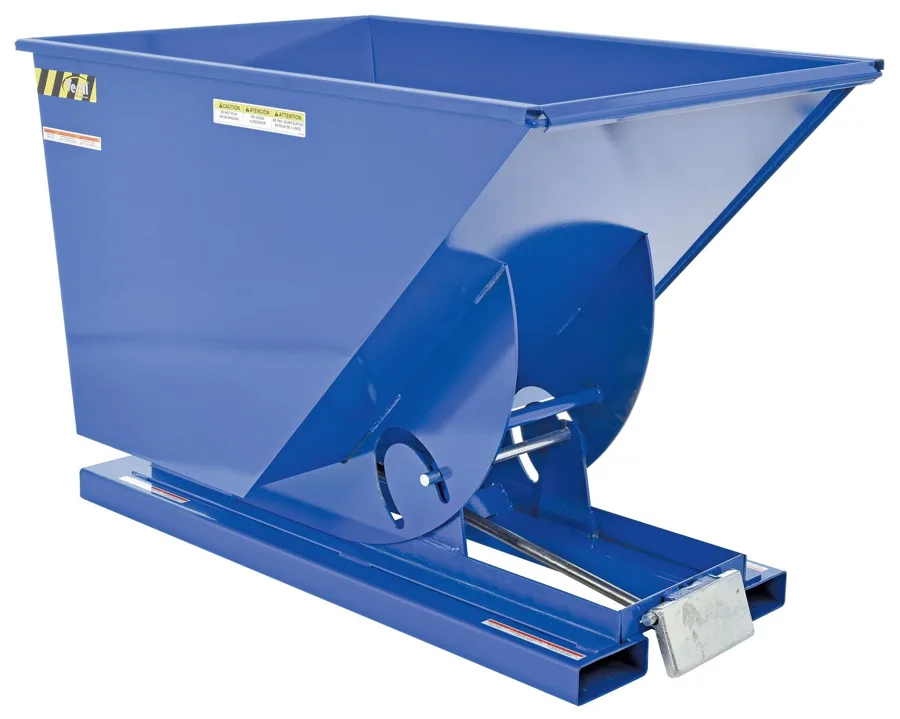
A self-dumping hopper is a steel bin that rides on a forklift's forks and tips to empty itself. Three numbers size it: volume in cubic yards, rated load in pounds, and its own weight, which the forklift carries on top of the fill. Blog, published November 13, 2026, updated November 17, 2026.
Dock Plate or Dock Board: What Each Is Built For and How Long It Has to Be
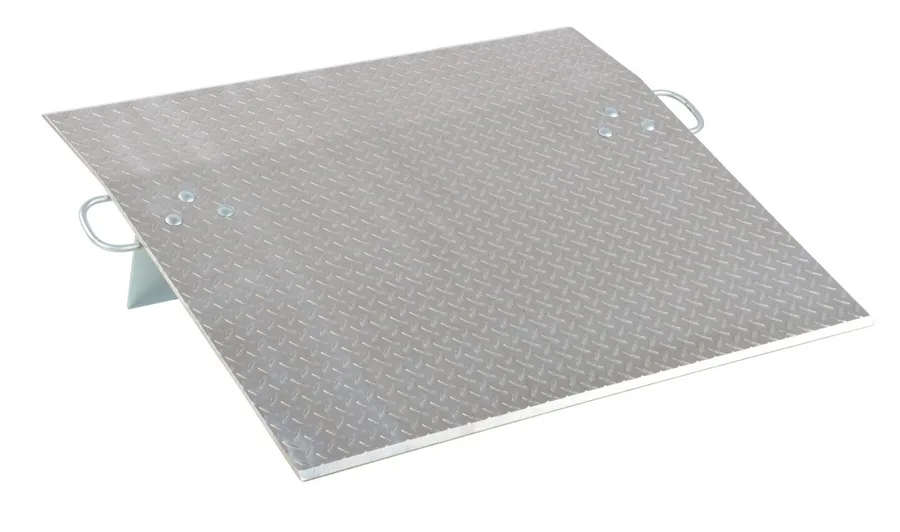
A dock plate bridges the gap between a loading dock and a trailer for hand trucks and manual pallet jacks. A dock board adds welded side curbs and carries forklifts. How long it has to be depends on the height difference: in Vestil's tables a 36 in plate is listed for up to 5 in. Blog, published November 13, 2026, updated November 17, 2026.
ECT vs Mullen: What 32 ECT and 200# Mean on a Box
ECT (edge crush test) measures how much load corrugated board takes standing on its edge, in pounds per inch; the Mullen test measures the pressure that bursts through it, in pounds per square inch. In the freight classification a 32 ECT box and a 200# Mullen box are the same class: up to 65 lb and 75 in of length plus width plus depth. Blog, published November 12, 2026, updated November 17, 2026.
Earplug NRR Explained: What the Noise Reduction Rating Number Means and Why It Overstates Protection
NRR, the Noise Reduction Rating, is the single number in decibels that the EPA requires on every hearing protector's package under 40 CFR Part 211, measured in a lab under ANSI S3.19-1974. OSHA subtracts 7 dB from it when the noise is measured in dBA, and both OSHA and NIOSH say real-world protection is usually lower than the label. Blog, published November 12, 2026, updated November 17, 2026.
Hi-Vis Vest Classes: What Class 1, 2 and 3 and Type O, R and P Mean (ANSI/ISEA 107)
Hi-vis vest classes come from ANSI/ISEA 107, the American National Standard for high-visibility safety apparel: Class 1, 2 and 3 set the minimum area of fluorescent background and reflective material, and Class 3 needs the most. Type O, R and P say where the garment is meant to be worn, and a vest alone can never be Class 3, because Class 3 needs sleeves. Blog, published November 11, 2026, updated November 17, 2026.
Cut-Resistant Glove Levels: What ANSI/ISEA 105-2024 A1 to A9 and EN 388 Codes Like 4X42D Mean
ANSI/ISEA 105-2024 rates a glove's cut resistance from A1 to A9 by the grams of force a razor blade needs to cut through the material in 20 mm of travel: A1 starts at 200 grams and A9 at 6,000 grams. Europe's EN 388 rates the same kind of test from A to F in newtons, and its top letter, F (30 N), is about half of an A9. Blog, published November 11, 2026, updated November 17, 2026.
Z87 on Safety Glasses: What Z87, Z87+ and the Other Markings Mean
Z87 on a safety-glasses frame or lens means the maker marks the product to ANSI/ISEA Z87.1, the American National Standard for occupational and educational eye and face protection. Z87+ means it is also marked as impact rated; plain Z87 meets the basic requirements without an impact rating. Blog, published November 10, 2026, updated November 17, 2026.
Shipping Box Sizes: How Boxes Are Measured and the Weight Carriers Bill For Them
A box maker lists a box by its inside length x width x depth in inches, but FedEx, UPS and USPS bill on the outside of the packed box. Each carrier divides those cubic inches by 139 and bills the greater of that dimensional weight and the actual weight, so a 12 x 12 x 12 in box bills as at least 13 lb at FedEx and UPS. Blog, published November 10, 2026, updated November 17, 2026.
PHMSA HM-268E: the RQ list moves to 40 CFR 302.4; what changes for drums, boxes and totes
PHMSA's final rule HM-268E (91 FR 49305) takes effect December 2, 2026. It replaces the hazardous substance and RQ tables in Appendix A to 49 CFR 172.101 with a reference to EPA's list at 40 CFR 302.4, and PHMSA says it does not change which materials are hazardous substances. The RQ mark on packages and shipping papers stays the same. Industry news, published November 10, 2026, updated November 17, 2026.
Carboy Sizes and Dimensions: From 10 L Lab Carboys to 15 Gallon Industrial Carboys
Carboys commonly run from about 2.5 to 15 gallons. Thermo's Nalgene LDPE round carboys come in 10, 15, 20, 25 and 50 L; the 20 L stands 528 mm (20.8 in) tall with its closure and 286 mm (11.3 in) across, and the 50 L 678 mm by 379 mm. Industrial HDPE carboys are commonly 15 gallons, tight-head. Blog, published November 9, 2026.
PHMSA HM-215S proposed rule: what changes for IBC totes, fiberboard boxes and labels
PHMSA proposed HM-215S on October 27, 2026 (91 FR 67720), and comments close December 28, 2026. For IBC totes it rewords the stacking mark from "stacking test load" to "superimposed stacking test mass", which PHMSA says changes no marking or test. It updates the fiberboard box water test to ISO 535:2023 and proposes no label change. Industry news, published November 8, 2026.
UN Markings on Drums, Pails and Boxes: How to Read 1A2/Y1.2/100 and 4G/X36.4/S
A UN mark is the code a maker prints on a tested drum, pail or box, read left to right: UN symbol, packaging code, test level (X, Y or Z), the specific gravity or gross mass tested, a test pressure or the letter S, the year, the country and the maker. 1A2/Y1.2/100 is an open-head steel drum tested at the Y level for liquids up to specific gravity 1.2 at 100 kPa. Blog, published November 7, 2026, updated November 17, 2026.
IBC Tote Valve Threads and Fittings: S60x6, 2 in NPS or Camlock
The 2 inches on an IBC tote valve is the valve size, not the thread. Schütz lists three outlets for that valve: S60x6 buttress thread, 2 in NPS pipe thread and camlock. S60x6 and 2 in pipe thread both measure about 60 mm across, so count the threads: about 4.2 per inch on S60x6 and 11.5 on pipe thread. Blog, published November 7, 2026, updated November 17, 2026.
Direct Thermal vs Thermal Transfer Labels: The Fingernail Test and Which to Buy
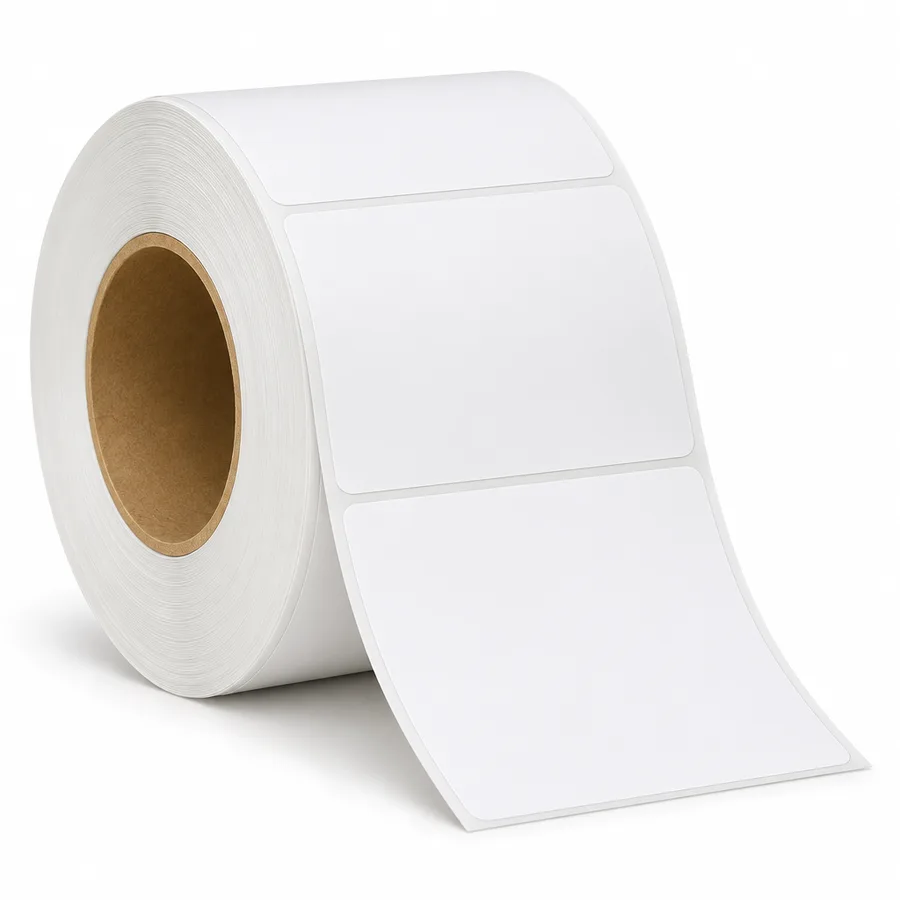
Direct thermal labels are heat-sensitive paper that blackens under the printhead, with no ribbon. Thermal transfer labels get their image from a heated ribbon. Direct thermal is for labels that only need to last from one week to one year; thermal transfer is for labels that have to last. Blog, published November 5, 2026, updated November 17, 2026.
5-Gallon Pail Dimensions and Weights: Plastic (HDPE) vs Steel
The HDPE press-on and tear-tab 5-gallon pails compared here stand 14½–14⅝ in tall without a lid; the steel examples stand 13⁷⁄₁₆ in tall. A 5-gallon water fill weighs about 41.7 lb, or 44.6 lb with the M&M M4 pail and lid. Steel filled weight depends on the empty pail weight, which the cited drawings do not list. Blog, published November 5, 2026, updated November 17, 2026.
IBC Tote Dimensions, Sizes and Weights: 275 vs 330 Gallon
A 275-gallon IBC tote is about 47.2 in long, 39.4 in wide and 45.7 in tall, and weighs about 123 to 130 lb empty. A 330-gallon IBC tote has the same footprint, stands about 53.1 in tall and weighs about 143 to 150 lb empty. Blog, published November 4, 2026, updated November 17, 2026.
HazCom November 20, 2026 date: what OSHA's rule says about workplace labels
November 20, 2026 is the date OSHA set for employers to update workplace labels, the hazard communication program and employee training, as necessary, for newly identified hazards in substances. Industry news, published November 4, 2026, updated November 17, 2026.
55-Gallon Drum Dimensions and Weights: Steel, Poly and Stainless
A 55-gallon drum is about 23 inches across and about 35 inches tall on the outside, and 22.5 inches across on the inside. On the published sheets below, an empty steel drum weighs 34 to 60 lb, a poly drum 18 to 22 lb and a stainless drum 48 to 60 lb. Blog, published November 4, 2026, updated November 17, 2026.
Find her elsewhere
LinkedIn · How she writes and checks our guides · About Oakspan Supply