







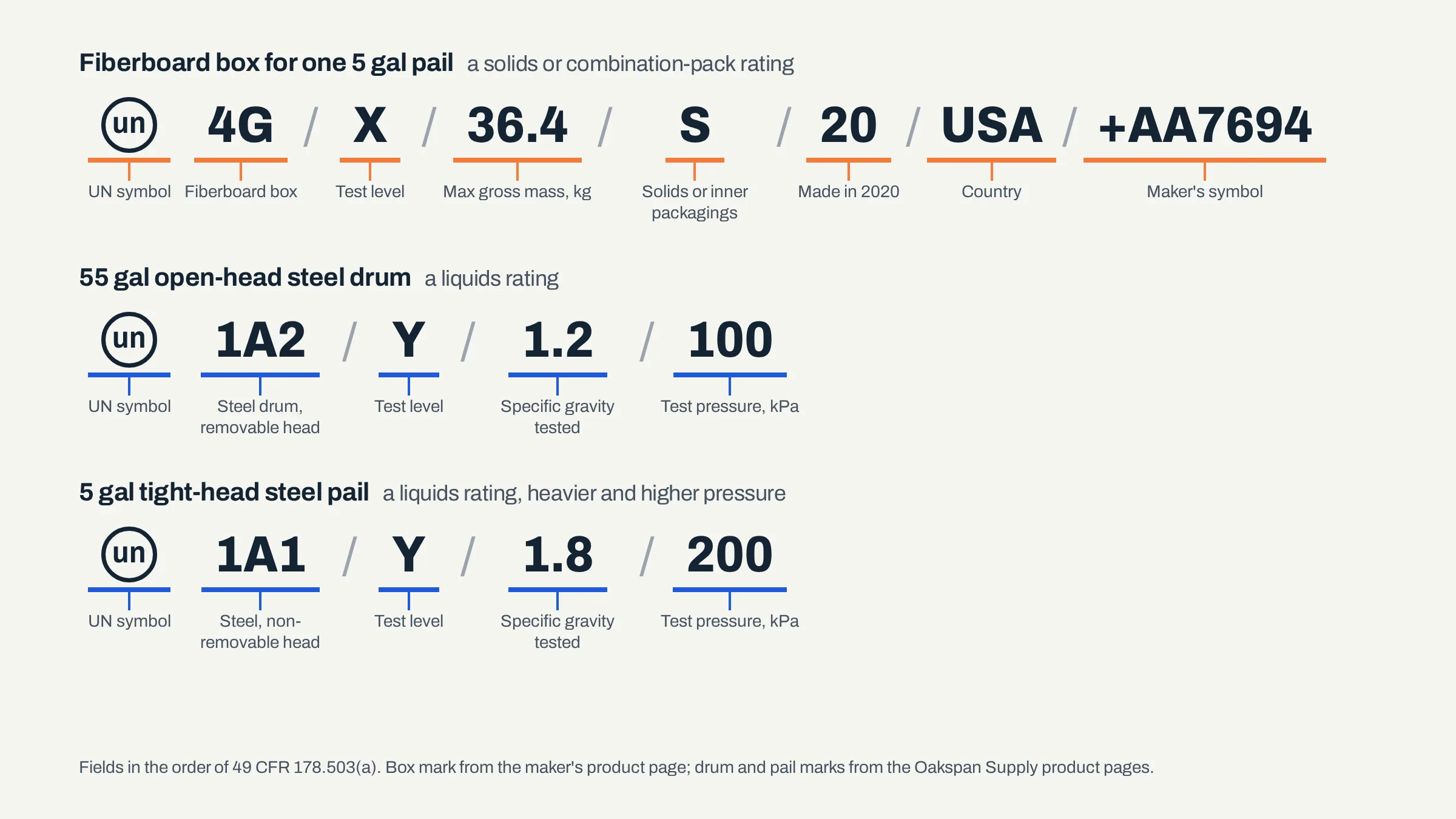
A UN mark is the code a maker prints on a tested drum, pail or box, read left to right: UN symbol, packaging code, test level (X, Y or Z), the specific gravity or gross mass tested, a test pressure or the letter S, the year, the country and the maker. 1A2/Y1.2/100 is an open-head steel drum tested at the Y level for liquids up to specific gravity 1.2 at 100 kPa.[1]
1A1 vs 1A2
Tight vs open1A1 is a steel drum with a non-removable head; 1A2 has a removable head.[2]
X, Y or Z
Test levelX: all three packing groups. Y: Packing Groups II and III. Z: the third group only.[1]
Ends in S
Solids ratingThe number before the S is the maximum gross mass in kg; a liquids mark shows kPa there.[1]
Free. Just your work email.
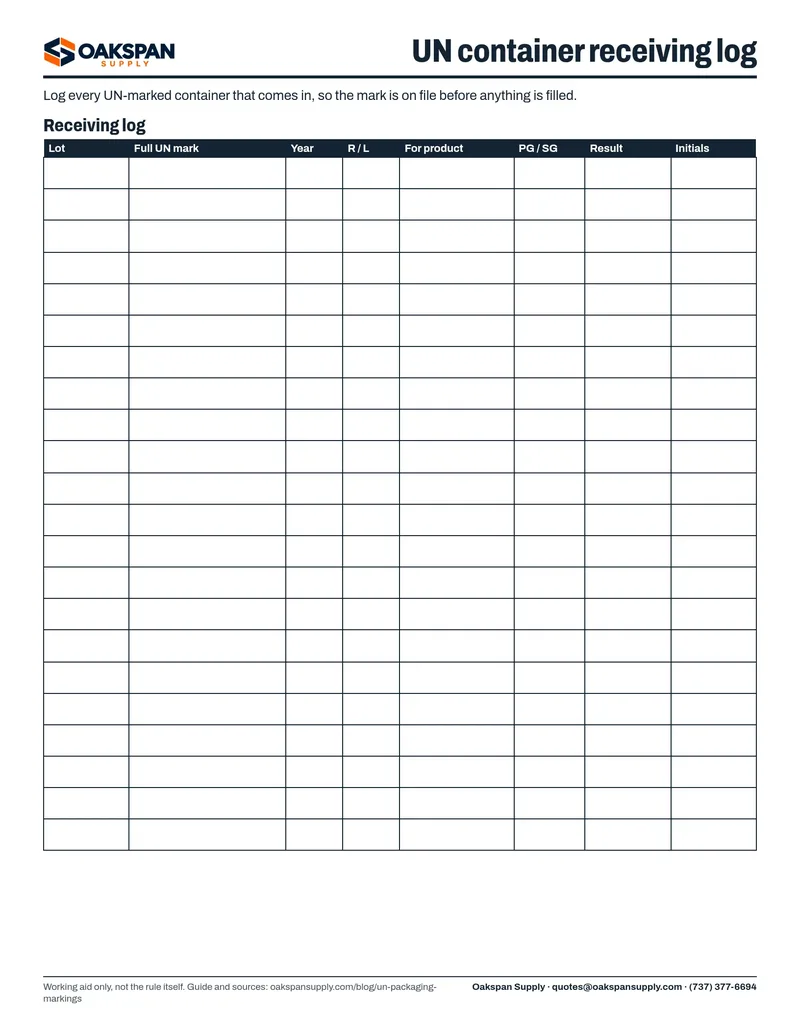
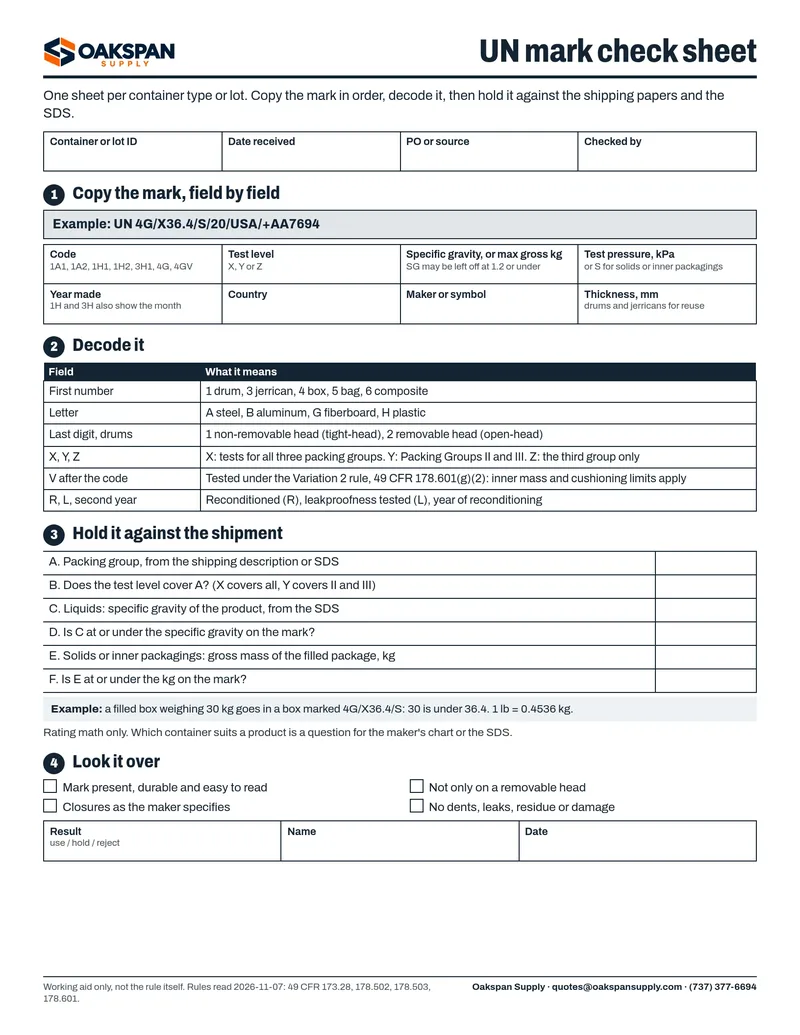
Print the UN mark check sheet
A two-page sheet: copy any UN mark field by field, decode it, and check it against the packing group and specific gravity before you fill.
- Copy the mark in the order the rule sets
- Decode the code, the test level and the S or pressure
- Check the packing group, specific gravity and gross mass
- Log every UN container you receive
Two pages, letter size. The sheet downloads right away. We'll send you the occasional supply guide and may use your email to show you our ads. Unsubscribe any time. Privacy policy.
A UN mark is read left to right, in a fixed order
49 CFR 178.503 requires a maker to mark every packaging it represents as meeting a UN standard, and the marks must appear in a set sequence, separated by slash marks. The rule allows one line or several lines, as long as the order holds.[1]
The table lists the fields top to bottom in the order 49 CFR 178.503(a) gives them. A UN mark on a drum, pail or box answers what the packaging is, how hard it was tested, what it was tested with, when it was made and who made it.[1]
Scroll across to see every column →
| Field | Example | What it tells you |
|---|---|---|
| UN symbol | UN | The letters u and n in a circle: the packaging is represented as meeting a UN standard. Embossed metal may show the letters UN instead |
| Packaging code | 1A2 | Type, material and category: here a steel drum with a removable head |
| Test level | Y | X, Y or Z: the hardest set of tests the design passed |
| Density or gross mass | 1.2 | Liquids: the specific gravity tested. Solids or inner packagings: the maximum gross mass in kg |
| Pressure or S | 100 | Liquids: the hydrostatic test pressure in kPa. Solids or inner packagings: the letter S |
| Year | 24 | Last two digits of the year of manufacture |
| Country | USA | The state authorizing the mark |
| Maker | +AA7694 | The manufacturer or approval agency, by name and address or by its registered symbol |
| Thickness | 1.2 | On metal or plastic drums and jerricans meant for reuse: material thickness in mm |
Source: [1]
The packaging code: what 1A2, 1H1, 3H1 and 4G mean
49 CFR 178.502 builds the code from three parts. The first number is the kind of packaging: 1 is a drum, 3 a jerrican, 4 a box, 5 a bag and 6 a composite packaging. The capital letter is the material: A is steel, B aluminum, G fiberboard and H plastic.[2]
The last number is the category within that kind. For steel drums, 49 CFR 178.502 says 1 means a non-removable head drum (1A1, a tight-head drum) and 2 means a removable head drum (1A2, an open-head drum).[2]
A composite packaging carries two letters: the first for the inner receptacle and the second for the outer packaging, so a plastic receptacle in a steel drum is 6HA1. A combination packaging, such as bottles inside a box, carries only the code of the outer packaging.[2]
A 15 gallon tight-head plastic carboy that carries a UN mark reads 1H1 for the same reason; our carboy sizes guide gives carboy heights and diameters from 10 L to 50 L.[2]
Scroll across to see every column →
| Code | Kind | Material | Head or category |
|---|---|---|---|
1A1 | Drum | Steel | Non-removable head (tight-head) |
1A2 | Drum | Steel | Removable head (open-head) |
1H1 | Drum | Plastic | Non-removable head (tight-head) |
1H2 | Drum | Plastic | Removable head (open-head) |
1G | Drum | Fiberboard | No category digit (fiber drum) |
3H1 | Jerrican | Plastic | Non-removable head |
4G | Box | Fiberboard | No category digit |
X, Y or Z: the test level the design passed
The letter after the code names the performance standard the design type passed. Under 49 CFR 178.503(a)(3), X is for packagings that pass the tests for all three packing groups, Y for packagings that pass the tests for Packing Groups II and III, and Z for packagings that pass only the tests for the third, lowest-hazard group.[1]
X is the hardest level and Z the lightest. The material's packing group comes from its shipping description and SDS, so check that first, then pick a container whose letter covers it.[1]
The numbers after the letter: liquids and solids read differently
For a single packaging made for liquids, the number after the letter is the specific gravity the design was tested at, rounded down to the first decimal, and the maker may leave it off when it is 1.2 or less. The next number is the hydrostatic test pressure in kilopascals, rounded down to the nearest 10 kPa.[1]
For solids or inner packagings, the number after the letter is the maximum gross mass in kilograms, and the letter S takes the place of the test pressure. A mark ending in /S is a solids or combination-pack rating, not a liquids rating.[1]
The table decodes five real marks. The steel drum and steel pail marks are from the Oakspan Supply product pages, and the two box marks are from HazmatPac's product pages for those boxes. NIST gives 1 psi as 6.894757 kPa and 1 lb as 0.4535924 kg.[8][9][10]
Scroll across to see every column →
| Mark | Packaging | Level | Tested for | Pressure or S |
|---|---|---|---|---|
1A2/Y1.2/100 | Steel drum, open-head | Y | Liquids, specific gravity 1.2 | 100 kPa (14.5 psi) |
1A2/X400/S | Steel drum, open-head | X | Solids, 400 kg (882 lb) gross | S |
1A1/Y1.8/200 | Steel pail, tight-head | Y | Liquids, specific gravity 1.8 | 200 kPa (29.0 psi) |
4G/X36.4/S/20/USA/+AA7694 | Fiberboard box for one 5 gal pail, made 2020 | X | Inner packagings, 36.4 kg (80.2 lb) gross | S |
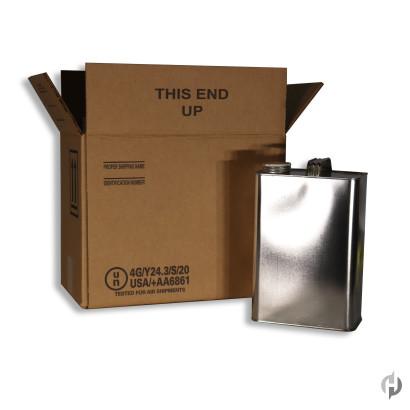
4G/Y24.3/S/20/USA/+AA6861 | Fiberboard box for 4 x 1 gal cans, made 2020 | Y | Inner packagings, 24.3 kg (53.6 lb) gross | S |
4G vs 4GV: what the V adds
49 CFR 178.503(a)(2) says the letter V must follow the packaging code on packagings tested under 49 CFR 178.601(g)(2), and gives 4GV as the example. That paragraph is Variation 2 of selective testing for combination packagings.[1][3]
Under Variation 2, inner packagings of any type may go in a tested outer box without further testing, within limits. The outer box must have passed the drop test with fragile inner packagings containing liquids, dropped from the height set for the highest-hazard packing group, and the total gross mass of the inner packagings may not exceed one half of the mass used in that drop test.[3]
The same paragraph keeps the cushioning at least as thick as in the tested box, and requires extra cushioning to fill the space when fewer or smaller inner packagings are used. A plain 4G box is approved for the inner packagings it was tested with, as the maker's closing instructions describe them.[3]
PHMSA's proposed rule HM-215S, published October 27, 2026, would update the Cobb water test for 4G boxes in 49 CFR 178.516 to the 2023 edition of ISO 535. Our news page on the HM-215S proposal covers what it changes for boxes and IBC totes.[11]
The letter W in the same position means something else. 49 CFR 178.503(a)(2) requires a W after the packaging code when an approval under 49 CFR 178.601(h) calls for it. That paragraph covers a packaging whose specifications or test methods differ from the standard ones and that the Associate Administrator has approved as equally effective.[1][3]
Marks on reconditioned drums: R, L and a second year
Under 49 CFR 178.503(c), a reconditioner adds its own marks near the original ones: the country where the work was done, its name or registered symbol, the last two digits of the year of reconditioning, and the letter R. A drum that passes a leakproofness test also gets the letter L.[1]
When a reconditioner re-applies the marks on a metal drum, those marks may show a different performance level than the original design type, but never a greater one. Every new metal drum over 100 L also carries its original marks in permanent form on the bottom, under 49 CFR 178.503(a)(10).[1]
A reconditioned drum therefore has two dates. The original year is in the main mark and on the bottom, and the reconditioning year sits next to the R.[1]
49 CFR 178.503(e)(3) prints an example: 1A1/Y1.4/150/92 on one line and USA/RB/93 RL on the next. Read with paragraph (c), that is a tight-head steel drum made in 1992 and reconditioned in the United States in 1993 by the reconditioner whose symbol is RB, with R for reconditioned and L for a passed leakproofness test.[1][2][6]
Where the mark sits, how big it is, and the rule's own four examples
49 CFR 178.3(a) puts the mark on a non-removable component of the packaging, in an unobstructed area. 49 CFR 178.503(b) adds that on a packaging with a removable head, the marks may not be applied only to the removable head. An open-head drum therefore carries its mark somewhere other than the cover alone.[1][4]
Under 49 CFR 178.3(a)(4), the letters and numerals must be at least 12.0 mm (0.47 in) high. On a packaging of 30 L (7.9 gal) or less for liquids, or 30 kg (66 lb) or less maximum net mass for solids, the minimum is 6.0 mm. At 5 L or 5 kg or less, the rule asks only for an appropriate size. On a package with a gross mass of more than 30 kg (66 lb), 49 CFR 178.3(a)(5) requires the marks or a duplicate on the top or on a side.[4]
Two more items can follow the mark. Where either head of a metal drum is thinner than the body, 49 CFR 178.503(a)(9)(i) requires three thicknesses, for the top head, body and bottom head, and gives 1.0-1.2-1.0 as an example. Under 49 CFR 178.503(a)(11), the rated capacity in liters may also be marked.[1]
49 CFR 178.503(e) prints four example marks, and the table decodes them. The steel drum for liquids ends in 1.0, the thickness of its steel in mm. The years 83, 92 and 93 are the rule's own, and the pounds and psi use the NIST factors given earlier.[1][6][8]
Scroll across to see every column →
| Mark | Packaging | Level | Tested for | Pressure or S | Year, country and maker |
|---|---|---|---|---|---|
4G/Y145/S/83 USA/RA | Fiberboard box for an inner packaging | Y | Inner packagings, 145 kg (319.7 lb) gross | S | Made 1983, USA, symbol RA |
1A1/Y1.4/150/83 USA/VL824 1.0 | Steel drum, tight-head, for liquids | Y | Liquids, specific gravity 1.4 | 150 kPa (21.8 psi) | Made 1983, USA, symbol VL824, 1.0 mm thick |
1A2/Y150/S/83 USA/VL825 | Steel drum, open-head, for solids or inner packagings | Y | Solids or inner packagings, 150 kg (330.7 lb) gross | S | Made 1983, USA, symbol VL825 |
1A1/Y1.4/150/92 USA/RB/93 RL | Steel drum, tight-head, reconditioned | Y | Liquids, specific gravity 1.4 | 150 kPa (21.8 psi) | Made 1992. Reconditioned in the USA in 1993 by RB. R: reconditioned. L: passed a leakproofness test |
Before you reuse a drum: the thickness mark and the five-year plastic limit
49 CFR 173.28(b)(4) authorizes reuse of metal and plastic drums and jerricans only when they carry a permanent thickness mark in mm, and only when that thickness meets the minimums in the rule. 49 CFR 173.28(a) also requires an inspection before reuse: no incompatible residue, rupture or other damage that reduces structural integrity.[7]
Before reuse, a packaging subject to the air leakproofness test must be retested and marked with an L, the tester's name or symbol, and the year. 49 CFR 173.28(b)(7) allows a narrow exception for the original filler refilling with compatible material, in its own vehicle, and for plastic that exception ends five years after the date of manufacture marked on the drum.[7]
Read the two-digit year in the UN mark before refilling a plastic drum. For a 1H1 or 1H2 drum, 49 CFR 178.503(a)(6) also requires the month of manufacture, which may be marked in another place on the drum.[1][7]
The UN-marked containers Oakspan Supply lists
Oakspan Supply sells plants, labs and warehouses the supplies on their list, from labels and drum closures to UN-marked drums, pails, jerricans, carboys, fiber drums, boxes and bottle kits. Each one has its own part number below.
Ratings vary by maker and lot, so the quote confirms the UN mark on the unit you will receive. Send the mark you need, or the packing group and specific gravity from the SDS, to our quotes desk at quotes@oakspansupply.com. Which container suits a product is a question for the maker's chart or the SDS.
For plain boxes that carry no UN mark, our guide to shipping box sizes shows how boxes are measured and the weight each carrier bills for them.
On our shelves

Questions
What does 1A1 mean on a drum?
1A1 is a steel drum with a non-removable head, a tight-head drum. Under 49 CFR 178.502, 1 means drum, A means steel and the last 1 means non-removable head; 1A2 is the removable-head version.[2]
What do X, Y and Z mean on UN packaging?
The letter is the test level the design passed. X covers all three packing groups, Y covers Packing Groups II and III, and Z covers only the third, lowest-hazard group, per 49 CFR 178.503(a)(3).[1]
What does the S mean in a UN mark?
S means the packaging was rated for solids or inner packagings, and the number before it is the maximum gross mass in kilograms. A liquids rating shows a test pressure in kPa in that position instead.[1]
What is the difference between 4G and 4GV?
A 4GV box was tested under the Variation 2 selective testing rule in 49 CFR 178.601(g)(2), so other inner packagings may be used without retesting within its limits on mass and cushioning. A 4G box is approved for the inner packagings it was tested with.[1][3]
How big does a UN mark have to be?
49 CFR 178.3(a)(4) sets a minimum height of 12.0 mm (0.47 in) for the letters and numerals, or 6.0 mm on packagings of 30 L or 30 kg or less. At 5 L or 5 kg or less the rule asks for an appropriate size.[4]
Have a list of what you need? Our quotes desk prices the exact items.

Written by Anastasiia Kuziak, Manager and President of Oakspan Supply. She has a business degree, owns a small business of her own, and has more than five years in medical and pharmaceutical sales. How we write and check our guides.
Sources
- 49 CFR 178.503, Marking of packagings. Electronic Code of Federal Regulations. Accessed 2026-11-17.
- 49 CFR 178.502, Identification codes for packagings. Electronic Code of Federal Regulations. Accessed 2026-11-17.
- 49 CFR 178.601, General requirements (performance-oriented packaging testing). Electronic Code of Federal Regulations. Accessed 2026-11-17.
- 49 CFR 178.3, Marking of packagings. Electronic Code of Federal Regulations. Accessed 2026-11-17.
- 49 CFR 178.508, Standards for fiber drums. Electronic Code of Federal Regulations. Accessed 2026-11-17.
- 49 CFR 178.503 (10-1-25 Edition), examples of markings, pp. 197-198. U.S. Government Publishing Office (GovInfo). Accessed 2026-11-17.
- 49 CFR 173.28, Reuse, reconditioning and remanufacture of packagings. Electronic Code of Federal Regulations. Accessed 2026-11-07.
- NIST Guide to the SI, Appendix B.9: Factors for units listed by kind of quantity. National Institute of Standards and Technology. Accessed 2026-11-17.
- 4 x 1 Gallon Oblong Can Kit. HazmatPac. Accessed 2026-11-07.
- Shipping box for X-rated 1H2 and 1H1 plastic pails. HazmatPac. Accessed 2026-11-07.
- Hazardous Materials: Harmonization With International Standards (HM-215S), proposed rule, 91 FR 67720, October 27, 2026. Federal Register. Accessed 2026-11-08.
Written from the sources above under our editorial policy. Published November 7, 2026, last updated November 17, 2026. Spot an error? Send us a correction and we fix it and note the date.
- Drums, totes and pails
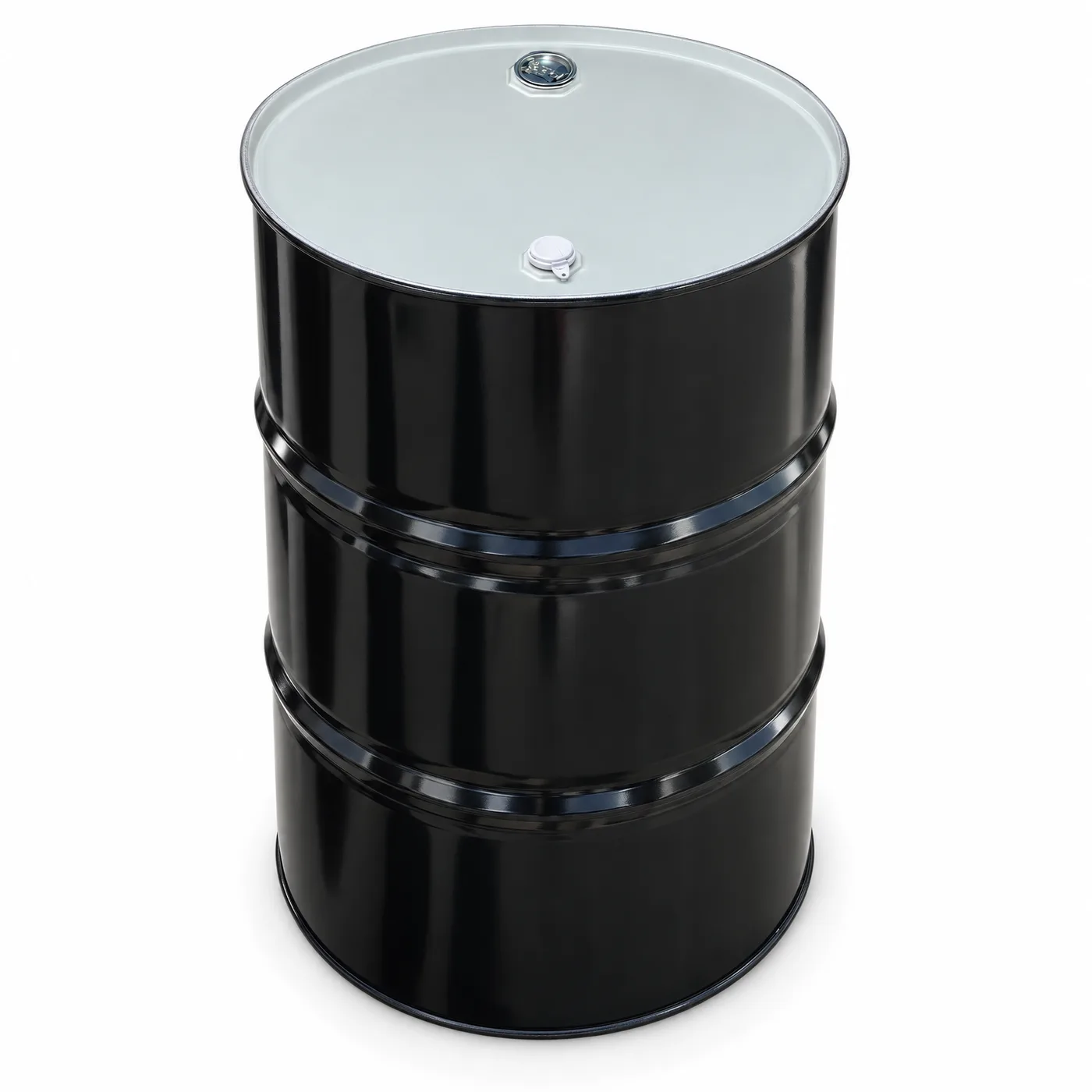
- OKS-CTR-SD55-OH-NEW: steel drum, 55 gal, open-head, 1A2/Y1.2/100 and 1A2/X400/S
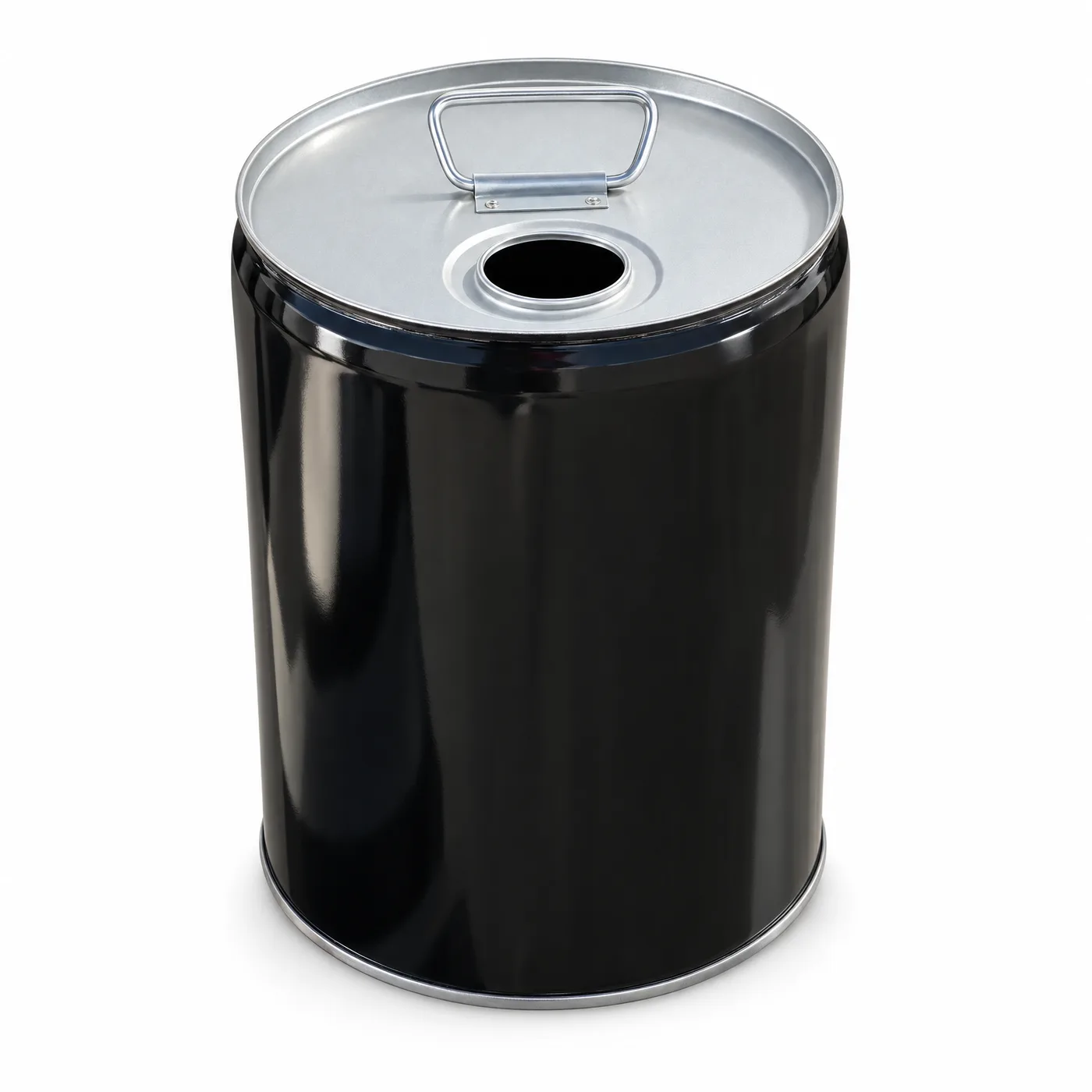
- OKS-CTR-PLS-5GAL: steel pail, 5 gal, tight-head, 1A1/Y1.8/200
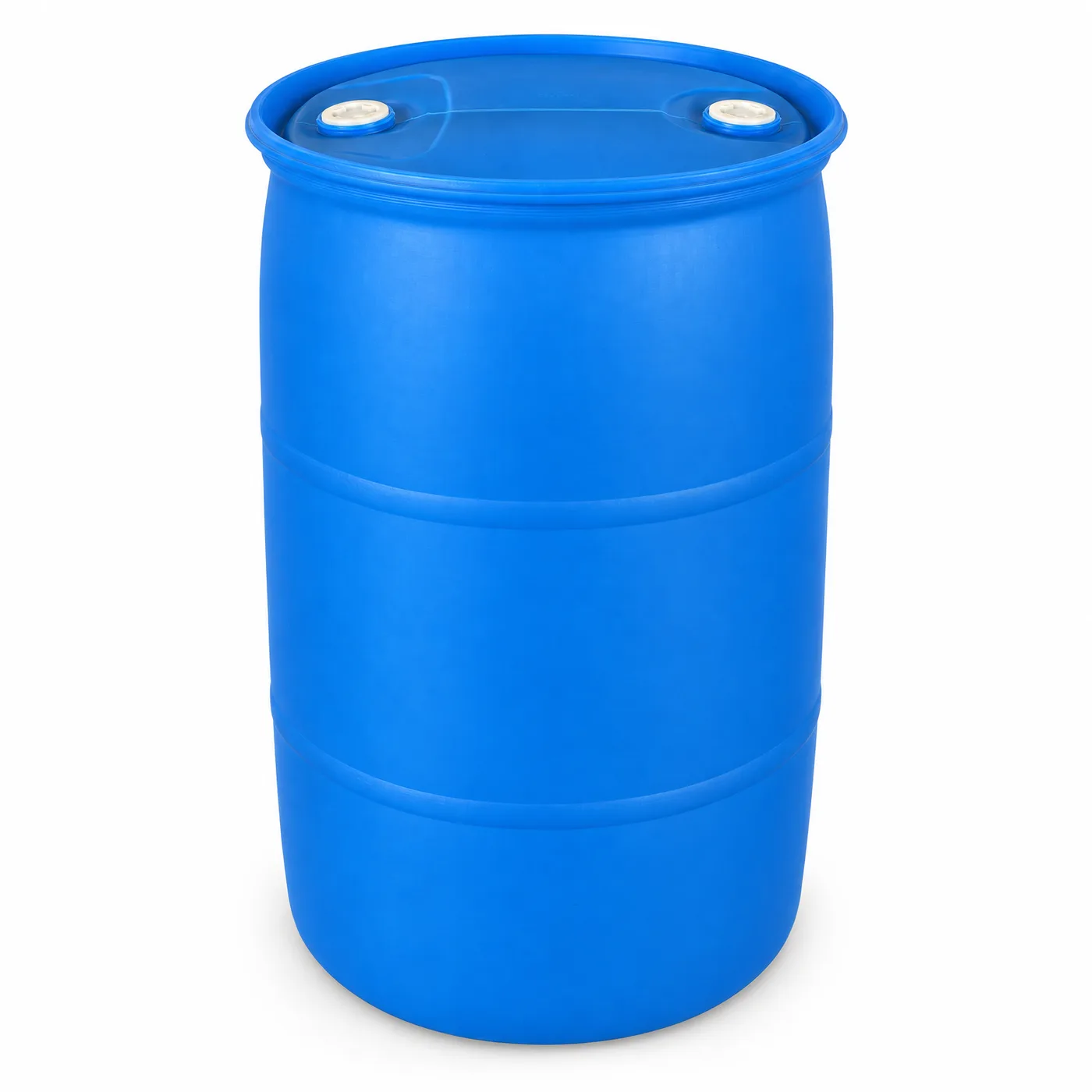
- OKS-CTR-PD55-TH-NEW: poly drum, 55 gal, tight-head, UN 1H1
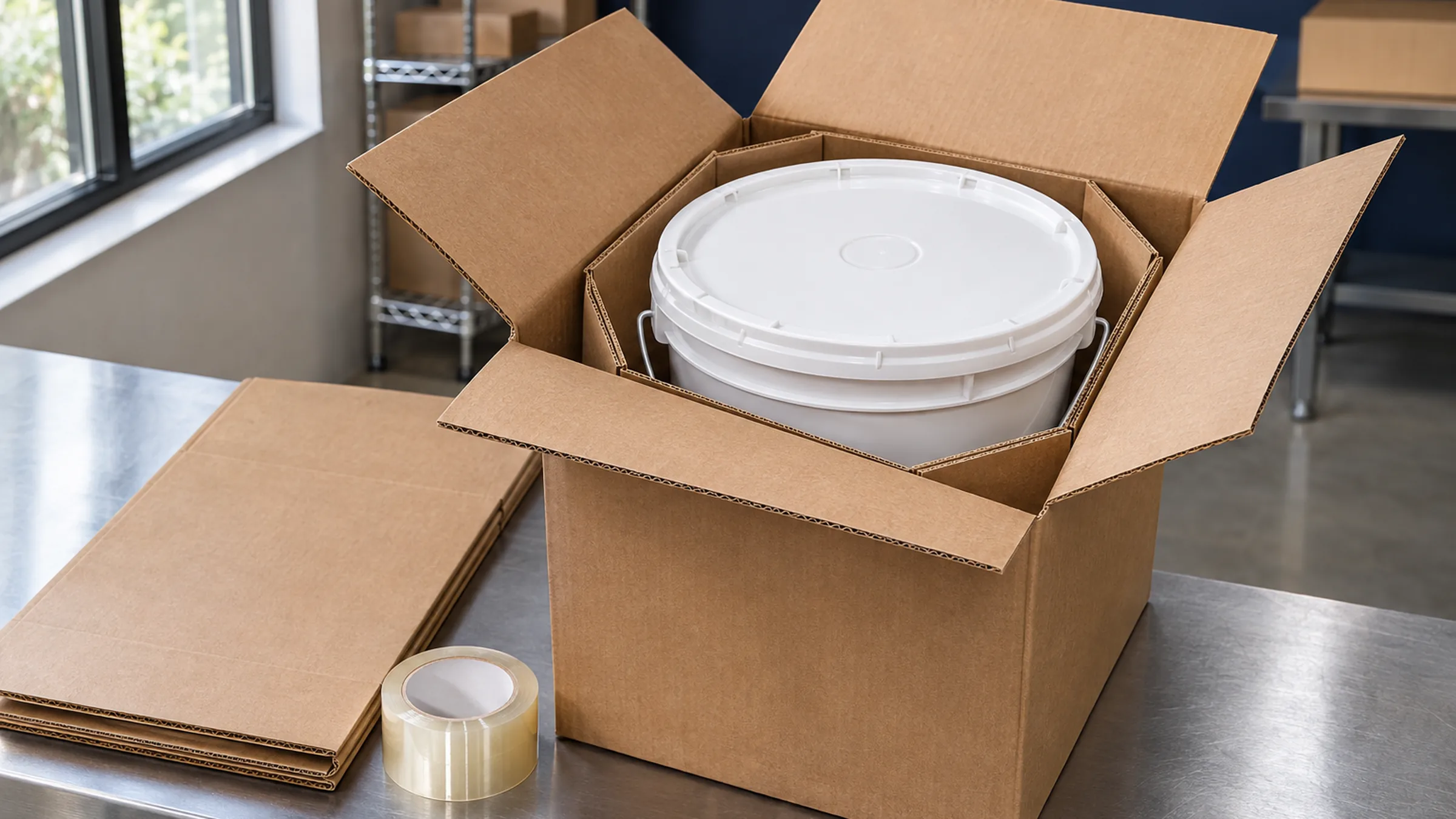
- OKS-PKG-UNB-1X5GAL: UN 4G box for one 5 gal pail
- OKS-PKG-KIT4L-4X4L: UN 4G kit for 4 x 4 L glass bottles
- PHMSA HM-215S proposed rule: IBC stacking mark wording, comments close Dec 28, 2026
- Carboy sizes and dimensions, 10 L to 15 gallon
- Shipping box sizes and the weight carriers bill for them
- 55-Gallon Drum Dimensions and Weights: Steel, Poly and Stainless
- 5-Gallon Pail Dimensions and Weights: Plastic (HDPE) vs Steel
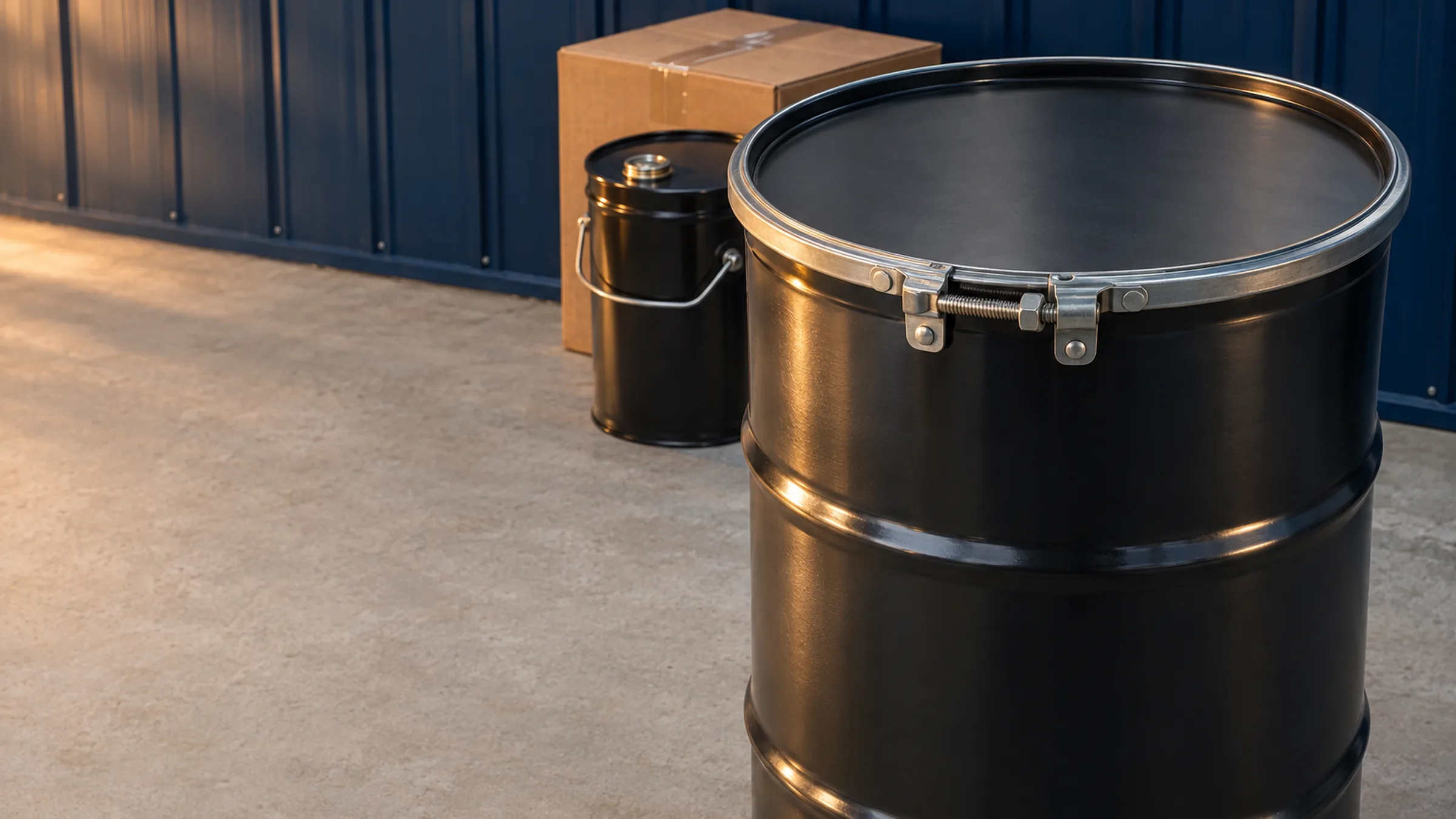
Pictures on this page are AI images made from our warehouse photos. Exact part and markings are confirmed in your quote.